Noise protection: minimizing exposure as much as possible
The key rules for air traffic are defined at the international level. Under the umbrella of the United Nations, ICAO addresses the reduction of aircraft noise. Independently of this, our central concern is to keep the impact of aircraft noise on local residents as low as possible. This is achieved, among other things, through technological, operational, and financial measures.
Aircraft Noise and Aircraft Noise Abatement
Technological measures Summary
Aircraft noise monitoring: stationary and mobile
The basis for all measures is comprehensive and modern monitoring: At 16 stationary noise measurement stations, we continuously monitor aircraft noise in the airport region. The measured noise levels can be accessed online in real time, as can all results for individual months and years in statistical form. In 2025, noise levels remained at the previous year’s level despite continued growth in flight operations.
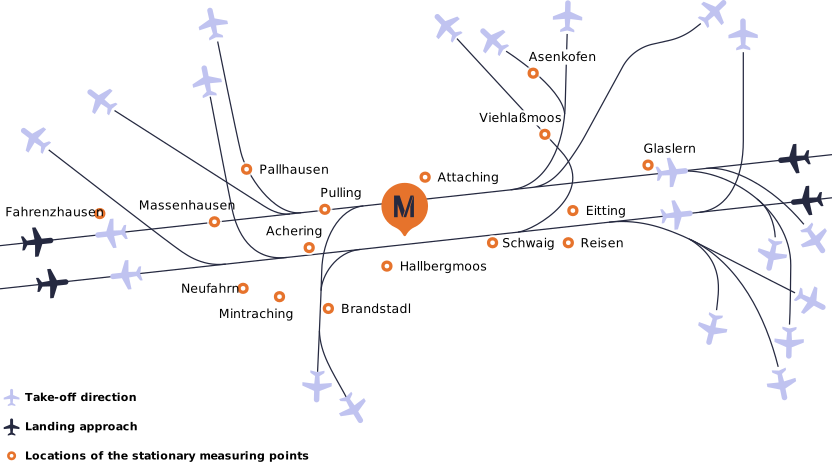
In addition, we operate mobile noise measurement stations in order to measure aircraft noise in municipalities without stationary measurement stations upon request. In the fiscal year, we conducted such measurements in the municipalities of Röhrmoos, Haimhausen, and Kumhausen.
Measurement results in real time
Active Against Aircraft Noise
Less noise in the surrounding area through modern aircraft
At Munich Airport, more and more aircraft with lower noise levels are being deployed. The Airbus A350 is considered the most environmentally friendly long-haul aircraft in the world. Compared to its predecessor, the A340, it produces significantly lower noise levels: up to 7 dB(A) less during takeoff and up to 3 dB(A) less during landing. This directly results in lower aircraft noise exposure in the surrounding area of the airport. Lufthansa now operates 25 of these fuel-efficient and low-emission long-haul aircraft at Munich Airport.
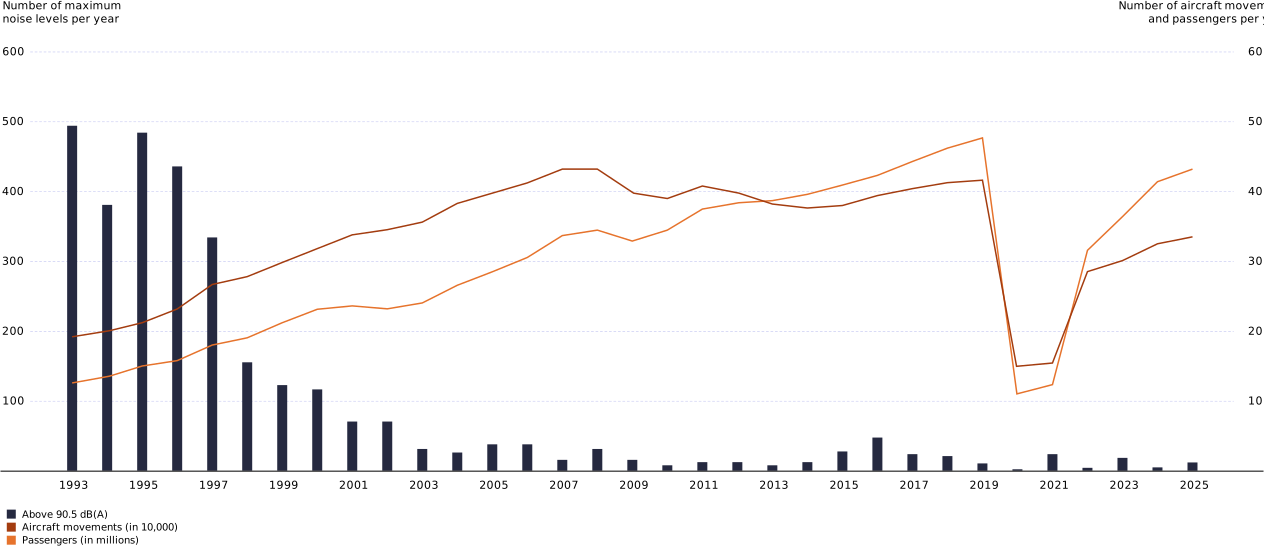
Technological progress in aviation has had a significant impact: Aircraft noise at Munich Airport has become increasingly decoupled from the growth in flight operations over recent decades. The number of maximum noise levels above 80.5 dB(A) has declined over the decades. The number of maximum noise levels above 90.5 dB(A) has decreased particularly significantly. While in the 1990s up to around 500 of these high levels were still measured annually, annual figures are now in the low double-digit or even single-digit range. Over the same period, the number of flight movements at Munich Airport has doubled, and passenger numbers have nearly quadrupled.
Operational measures Summary
Noise-based base charges: the quieter, the lower the fees
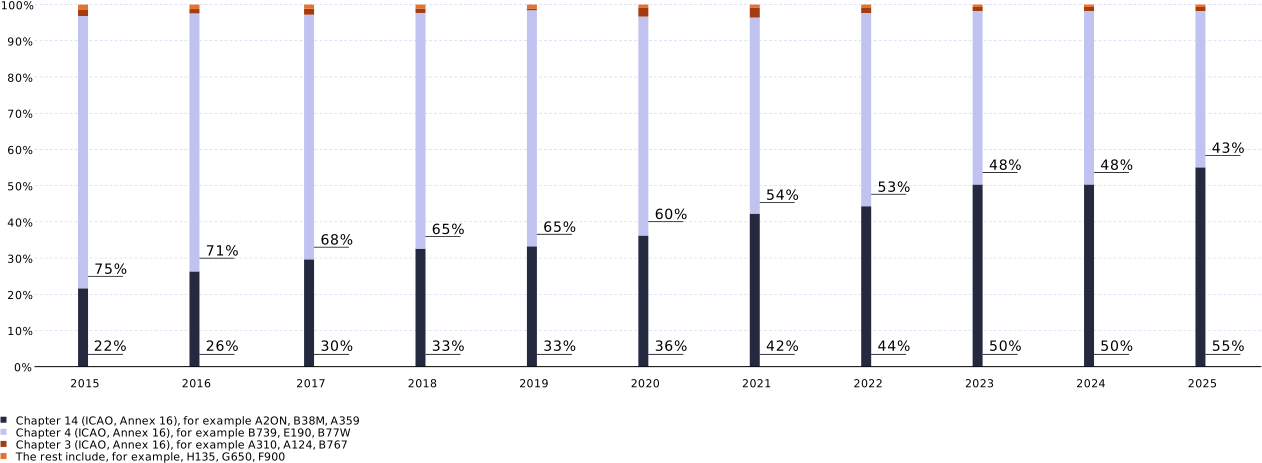
To ensure that airlines benefit from using quieter aircraft, they pay lower charges for these than for louder aircraft. There are 13 different noise categories used for calculation. The basis is the noise values measured at the airport. It is also more expensive to fly at night than during the day: Depending on the time of day, surcharges apply to the noise-based base charge. In 2025, more than half of all aircraft movements at Munich Airport already met the strictest requirements of so-called «Section 14» in accordance with ICAO noise certification.
Night flight regulation
The night flight regulation significantly restricts flight operations at night. For example, the regulation provides for a noise quota that takes into account the number of movements as well as the respective type and size of aircraft. In 2025, the noise quota at Munich Airport was utilized to 53 percent. The average continuous sound level at the boundary of the protected area was below the permitted value of 50 dB(A).
Noise action plan for Munich Airport
The Government of Upper Bavaria, with the participation of the public and the affected municipalities, published a noise action plan for Munich Airport as early as the end of 2021. This presents numerous measures already implemented to reduce aircraft noise in the surrounding area of the airport. With the noise action plan, the Government is implementing the EU directive on the assessment and management of environmental noise for Munich Airport. In 2023, the Government of Upper Bavaria reviewed the noise action plan and concluded that no update was currently necessary.
Financial measures Summary
Passive noise protection: FMG service
Since 1992, FMG has invested a total of EUR 62 million in noise protection measures and installed around 21,000 soundproof windows and around 20,000 ventilation units in buildings in the surrounding area. As part of the «Gießharzscheiben» (cast resin panes) service program, defective soundproof glass in such windows that we had financed under earlier noise protection programs was replaced on a voluntary basis in more than 150 cases. This service program ended at the end of 2025.
The Bavarian State Ministry of Housing, Building and Transport has initiated the procedure for designating the noise protection area for Munich Airport in accordance with the Act on Protection Against Aircraft Noise. At the request of the Ministry, FMG has submitted data on the type and scope of the expected flight operations for the forecast year 2033. As a result, the noise protection area will be defined in a public procedure, and it will be examined whether changes in noise protection or new affected areas arise.