Report on economic position
Economic environment Summary
Macroeconomic environment
Stable economic development
Both national and international economic developments are crucial for a global air traffic hub such as Munich Airport.
Despite geopolitical tensions and trade conflicts, the global economy proved to be stable in 2025. Global industrial production expanded and, despite the US tariff policy, the international trade in goods increased relatively strongly by 3.5%. In contrast, inflation rates continued to decline. Nonetheless, global gross domestic product (GDP) grew by 2.6% (2024: 2.8%), and thus matched the previous year’s forecast3).
In the emerging markets, the economy grew at an overall rate of 4.2% (2024: 4.7%). The economy of the People’s Republic of China was supported primarily by a strong export business. Domestic demand there remained weak, however, due to the continuing decline in property prices. Overall, China’s GDP grew by 4.8% (2024: 5.0%). In the Asian region, it was mainly India that contributed to strong growth with GDP rising at an unchanged rate of 6.7%4).
GDP in the industrialized countries grew by 1.7% (2024: 1.9%). Inflation rates thus stagnated at a slightly elevated level in 2025. Base rates at the most important central banks fell over the course of the year, with monetary policy generally less restrictive as a result. GDP growth was spread unevenly among the various national economies. Positive momentum continued to come from the US economy, where GDP grew by 2.0%. The expansion was driven here primarily by strong private consumption and higher corporate investments, especially in the area of artificial intelligence (AI). The British economy grew at a rate of 1.4% year-on-year (2024: 1.1%)5).
Economic growth of selected countries worldwide:
in %
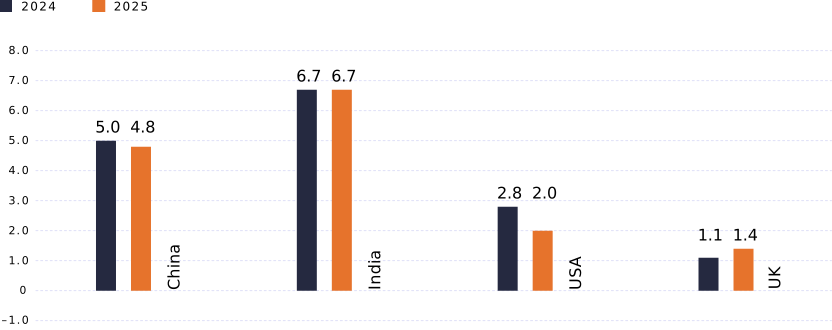
ifo Institute, Economic Forecast Winter 2025, December 2025, p. 8; German Council of Economic Experts, Annual Report 2025/26, November 2025, p. 39
Economic output in the euro zone increased at a below-average rate in a global comparison, growing by just 1.4% (2024: 0.9%), as it was adversely impacted in particular by the tense geopolitical situation and the introduction of trade tariffs. Positive stimulus emerged from private consumption, however, with real wage increases and a robust labor market strengthening domestic demand. The growth was spread unevenly among the member states. While economic output in Spain in particular continued to develop in a positive direction, Germany lagged a significant distance behind. The inflation rate normalized at close to 2.0%. The European Central Bank has cut its key interest rate eight times to a level of 2.0% (deposit rate) since June 2024. Monetary policy is thus neutral. Based on a long-term comparison, the unemployment rate in the euro zone was correspondingly low at 6.4%7).
Economic growth of selected countries across Europe:
in %
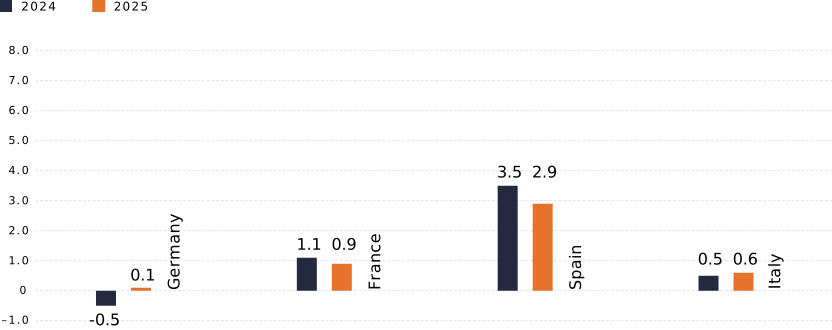
ifo Institute, Economic Forecast Winter 2025, December 2025, p. 8
The German economy finds itself in a process of far-reaching structural change that is marked by decarbonization, digitalization, demographic change, and geopolitical upheaval. Demographic change, which is especially pronounced in the Federal Republic of Germany, and the high macroeconomic proportion of manufacturing industries are making it difficult to implement the necessary adjustments. Unfavorable general national conditions, such as dilapidated traffic infrastructure and outdated digital infrastructure and high regulatory costs, constitute an additional obstacle. Persistently high energy prices, a euro exchange rate that increased over the course of the year, and new competitors especially from China have diminished the competitiveness of German companies. Higher US trade tariffs have additionally weighed on the export business. Exports consequently declined by 0.2%. In contrast, imports increased by 3.4%. Investments decreased by 0.7%. Overall, gross value added in the manufacturing industries shrank by 1.0% in 2025. The construction sector also faced a crisis (–1.4%) in 2025 on account of higher residential building costs. In contrast, private consumption performed somewhat more strongly, growing at 0.8%, than in the previous year 0.5%. At 2.2% on average during the year, the inflation rate remained at the previous year’s level and was thus close to the target of 2.0%. Compared to the previous year, the unemployment rate rose by 0.3 percentage points to 6.3%. Overall, Germany’s GDP grew in 2025 only marginally by 0.1%9).
In 2025, the oil price (Brent) fluctuated in a range between USD 59 and USD 86 per barrel. The price recorded its highest point at the end of June and the lowest point in the middle of December. At the end of the year, the oil price was around USD 62 per barrel10).
Economic environment air traffic (Aviation)
Stabilization of air traffic
According to data from the International Air Transport Association (IATA), which is based on revenue passenger kilometers (RPK), global passenger traffic grew by 5.3% in 2025 compared with the previous year. The capacity utilization of aircraft remained unchanged year-on-year at 84%. With an increase of 5.3%, the trend in Europe was on a par with the global average. The Asia-Pacific market proved to be the strongest growth driver, increasing by 7.8% year-on-year11).
At +3.4%, the increase in global freight volume, measured in cargo tonne kilometers, weakened after two-digit growth in the previous year. With growth of +2.9%, demand in Europe lagged behind the global performance. Asia-Pacific freight traffic proved to be the strongest performer with growth of 8.4%12).
Publications of the Airport Council International/Europe (ACI) trade association showed global growth in passenger traffic of 3.6% in 2025. According to the ACI, the momentum for growth has normalized following a rapid recovery phase13).
The European air traffic control service provider Eurocontrol analyzed current and future trends in its 2025–2031 Forecast Update. With around 11 million flights (+3.6%), European air traffic in 2025 reached broadly the pre-crisis level of 2019 and thus recorded moderate growth, which was marked, however, by an uneven regional performance 14).
In its 2025 annual report, the German Aviation Association (BDL) referred to the persistent below-average development of the German aviation market. In the period under review, the number of passengers rose by 3.6%, but thus reached only 88% of the pre-crisis level. The available seats offered amounted to just 89% in Germany. At the European level – adjusted for the German market – the available seats offered reached 108%, by contrast. The BDL attributes this primarily to the sharp rise in government aviation surcharges, which have almost doubled since 202015).
The airports organized in the German Airports Association (ADV) again recorded year-on-year growth in 2025. A total of 219.8 million airline passengers were processed (+3.6%). Aircraft movements increased in the comparison period by 3.9% to around 2.1 million. At 4.9 million tonnes, cargo volume (airfreight and airmail throughput) recorded growth of 1.1% and was thus slightly higher than the pre-crisis year of 2019 (+0.8%) 16).
Economic environment Commercial Activities
Parking – Dependence on passenger volume and passenger mix
Demand for parking rose simultaneously with the volume of departing passengers, which is also reflected in the revenue. 47% of air passengers arrived on their own in 2025, which corresponds to a decline of 11% from 2024. The high-revenue business traveler segment is still considerably smaller than it was in 2019. Most of this was successfully compensated by demand-oriented yield management.
Brick and mortar retail stagnates
As a result of high inflation, consumption picked up only moderately in 2025, rising 3.0% year-on-year to 683.7 billion euros, equivalent to a real increase of 1.5%, according to the Handelsverband Deutscher Einzelhändler (HDE – Association of German Retailers). The nominal growth was generated with a lower share accounted for by the brick and mortar retail segment (2025: +2.8%)17).
The business climate in the retail sector improved to 87.6 percentage points in December 2025, after 84.9 percentage points in the previous year18).
Gastronomy and hotel industry – revenue trending down
Compared to the previous year, revenue in the food and hotel sector saw a slight decline of 0.2% nominally, which, adjusted for inflation, is equivalent to a 3.6% decline19).
Some industry sectors experienced the following changes compared to the previous year: in the hotel and other accommodation sector, revenue declined by 1.0%, which, adjusted for inflation, is equivalent to a decline of 3.5%. The gastronomy sector recorded a 0.3% decline in revenue (–4.1% in real terms). Only the catering sector generated an increase, growing 1.2% in nominal terms (real – 3.4%)20).
Advertising business – strong growth in out of home advertising
Compared to the previous year, revenues generated by the Out of Home advertising category, which is relevant for the airport, increased by around 9.9% to reach 3.6 billion euros in Germany21).
Economic environment Real Estate
Overall market registers slight decline
The Munich office leasing market achieved lower take-up at 580,800 m² compared with the previous year (2024: 606,200 m²). This is equivalent to a 4.0% decline. Excluding owner-occupied space, the purely rental performance was 538,800 m² (2024: 551,600 m²). In contrast, revenue in the major user segment rose: 35% more space was leased here than in the previous year. This cannot, however, gloss over the fact that demand in the mid-size space classes declined significantly year-on-year. Around 30% less income was generated in the mid-size segment compared to the previous year. Total take-up revenue was therefore still 18% lower than the long-term average22).
Vacancy levels in the Munich office market rose by one percentage point to 9.7%. The momentum behind the increase has slowed since the middle of 2025. At the same time, the increasing polarization based on location and quality has continued. Within the «Middle Ring», the available stock of short-term office space declined for the irst time in more than five years, registering a slight drop of 5.1% (2024: increase of 5.2%). The vacancy rate in the other districts increased by 12.4% (2024: 11.1%) on the other hand. 71% of the total vacant space can be found in buildings that are at least 20 years old and in many cases no longer meet current user requirements. The vacancy rate also rose in the surrounding region from 10.5% to 12.6%23).
Despite the increase in the supply of space, rents continued to trend upward. The average rent rose by 10.0% to 27.50 EUR/m² (2024: 25.10 EUR/m² ) within a year, while prime rents also recorded a 10.0% increased to 59.00 EUR/m² (2024: 53.50 EUR/m²). This trend reflects the continued high demand for high-quality, modern spaces regardless of location. In contrast, rents in the existing building segment stagnated, illustrating the fact that building quality is playing an increasingly crucial role in the setting of prices especially in other districts enjoying high demand. Accordingly, rents here reached an average of 19.10 EUR/m² and were thus only around one euro higher than they were five years ago24).
There is currently just under 655,200 m² of office space under construction, 44.0% of which is already pre-leased or earmarked for owner-occupied use. As things stand at the moment, 221,000 m² of this will be completed in 2026, 59.0% of which already set to be occupied. The caution among project developers that was noticeable after the turnaround in interest rates has eased somewhat. A moderate increase in construction starts can again be observed. These predominantly involve smaller projects where it is easier to realize pre-leasing rates and projects with a high proportion of owner-occupiers25).
The Munich office market will not return to its earlier intensity of demand in the near future. The Munich economic region, however, faces fewer structural obstacles when compared with other top locations: office employment is experiencing continual growth, driven by high-tech, a dynamic IT sector, biotechnology, and business-related services. Strong universities, important development centers belonging to international corporations, and a dynamic start-up scene ensure that skilled personnel, projects, and capital remain extensively bundled in the region26).
Course of business Summary
Key events in the past fiscal year
Establishment of strategic partnerships
CHI Aviation Handling GmbH took over 74.9% of the shares in Cargogate Munich Airport GmbH, Hallbergmoos, previously a wholly owned subsidiary of FMG, with effect from January 2, 2025. The remaining 25.1% is held by FMG, thus establishing a forward-looking strategic partnership that has both proven freight expertise and a large customer network. The joint goal is to the sustainable ongoing development and significant strengthening of the cargo handling and volume at Munich Airport.
With effect from April 1, 2025 the AXS Group and its company AHS Aviation Handling Service GmbH took over took over 100% of the shares in aerogate München Gesellschaft für Luftverkehrsabfertigungen mbH, Oberding. The sale ensures premium passenger services in Munich, allowing them to be offered to the airlines in the usual manner.
Upgrading of security checkpoints in Terminal 2
After a three-year conversion phase in day-to-day operations, the fully upgraded security checkpoint lanes in Terminal 2 were put into service in April 2025. A total of 15 new checkpoint lanes with CT scanners now facilitate quicker processes, a higher degree of passenger convenience, and significantly enhanced security standards. Thanks to the new technology, electronic devices and liquids can remain in passengers’ hand luggage, while potential hazardous substances are automatically identified, reducing the need for follow-up inspections.
New e-bus depot for zero-emission apron operations
A new e-bus depot with 50 charging points for electric passenger buses was put into operation in the southern part of Munich Airport in August 2025. This new charging infrastructure and the additional vehicles mark another step forward in Munich Airport’s drive toward zero-emission apron operations. The next expansion phase on the west side of the grounds is planned for 2026 and 2027 – with another 22 charging points as well as carports fitted with photovoltaic systems.
The depot supports the ongoing electrification of the bus fleet at Munich Airport and makes an important contribution to reducing CO₂ emissions.
Opening of the largest charging station for electric vehicles in Bavaria
The largest charging station for electric vehicles in Bavaria came into operation in parking garage P44 in September 2025. The facility comprises 275 charging points and is supplied with renewable electricity generated from photovoltaic systems of the roofs of P43 and P44, which provide a maximum output of three megawatts – that is roughly equivalent to the average demand of 1,000 three-person households. The project is a key building block in Munich Airport’s sustainability strategy and serves as a reference for further sustainable infrastructure measures.
Handover of the leased premises at the LabCampus to the Technical University of Munich
After a 12-month expansion, around 20,400 m² was handed over to the Technical University of Munich (TUM) on October 1, 2025. The premises form the basis of the TUM Convergence Center – an interdisciplinary innovation and research forum that will open in 2026 and promote dialog between science and business. Thanks to the presence of TUM and also the other lessees, the LabCampus is increasingly developing into a central location for cooperation projects, knowledge transfer, and future-oriented technologies.
Aviation business
Passenger growth significantly higher than national average
Traffic trends were solidly higher in 2025 than the previous year’s result.
Change | ||||
|---|---|---|---|---|
2025 | 2024 | Absolute | Relative in % | |
Aircraft movements | 337,438 | 327,228 | 10,210 | 3.1 |
Passengers (in millions) | 43.4 | 41.6 | 1.8 | 4.4 |
Airfreight throughput (in tonnes) | 339,671 | 307,635 | 32,036 | 10.4 |
Airmail throughput (in tonnes) | 1,075 | 3,455 | −2,380 | −68.9 |
deviations possible due to rounding
With 43.4 million airline passengers (+4.4%) and 337,438 aircraft movements (+3.1%), traffic figures at Munich Airport again increased over the previous year. Passenger volumes were around 91% and movements 81% of the values from the 2019 reference year.
A substantial recovery trend was already noticeable during the Easter holidays and continued to gain traction from Whitsun onward. As in the previous year, the very high utilization rates (81%) and high ticket prices show that it was sometimes difficult to meet demand.
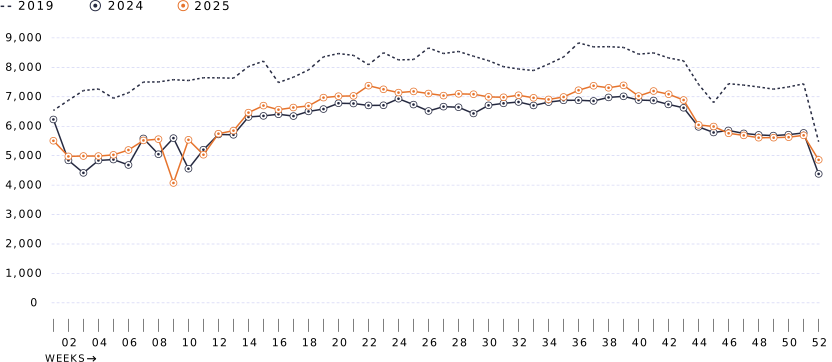
Aircraft movements per calendar week 2019/2024/2025 (commercial traffic)
Long-haul traffic recorded the most substantial growth in the period under review. With 8.9 million commercial passengers, an increase of around 9% was recorded and the 2019 reference year was exceeded by 5%. As in the previous year, the largest long-haul market was the US, registering around 3.5 million passengers (+4%) and growth of 17% from pre-crisis levels.
The number of domestic passengers stagnated at around 6.1 million in 2025 (–1%). German traffic continued to feel the pressure of higher prices and a reduced service offer.
Continental traffic saw a significant recovery, by contrast. Around 28.4 million commercial airline passengers used Munich Airport, equivalent to an increase of approximately 4%. Very good capacity utilization of 81% of available seats offered was achieved across all segments. The hub traffic of Deutsche Lufthansa, which accounted for 42% of connecting passengers (2024: 42%; 2019: 39%), was an important reason behind this development.
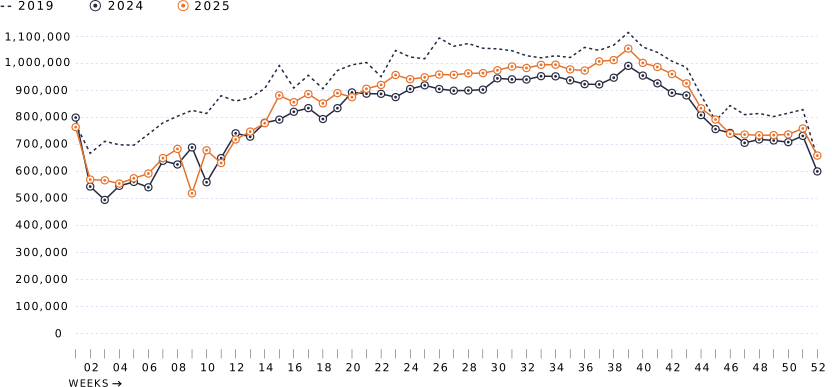
Passengers per calendar week 2019/2024/2025 (commercial traffic)
Commercial airfreight throughput improved by around 10% over the previous year to reach 339,671 tonnes, exceeding the pre-crisis level by just under 2%. As the long-haul passenger segment continued to recover, bellyhold cargo volumes handled in Munich increased by 11% compared to 2024 to reach 303,299 tonnes (+6% compared to 2019). The share of bellyhold cargo out of the total freight volume increased to 89% and was thus far higher than the level of a good 80% normally seen before the crisis. Freight trends in Munich thus exceeded the global growth in airfreight of around 3% by some distance.
Airmail throughput fell to approximately 1,075 tonnes (–69%) and thus reached only around 6% of the 2019 volume.
Compared to the airports organized in the ADV, Munich Airport saw above-average growth in the passenger and cargo segments, with only movements increasing at a somewhat lower rate than the ADV average. Frankfurt Airport, which was still regarded as a growth driver in the previous year, recorded only about half as much growth in the passenger segment as Munich Airport A noteworthy feature in the airfreight segment was that the trend at the freight-only locations of Cologne/Bonn and Leipzig/Halle stagnated.
in %
ADV | Munich | |
|---|---|---|
Movements (all traffic) | +3.9 | +3.1 |
Passengers (commercial traffic) | +3.6 | +4.4 |
Cargo (airfreight and airmail including transit) | +1.1 | +9.5 |
ADV, ADV-12.2025_MoSta-Flughäfen
The ranking of European airports with the highest traffic volumes has been characterized by extreme changes since the start of the pandemic and an incomplete data situation and is also being influenced by the impacts of the Russian attack on Ukraine. Measured by passenger volume, Munich occupied 10th position, as it did in the previous year. Despite difficult general political conditions, in particular the government-induced locations costs that are extremely high by international standards, Munich was able to move up a place and rank 8th in aircraft movements.28)
Ground handling services in a difficult economic and operating environment despite recovery
Three ground handling licenses have been operated at Munich Airport since the end of 2025. One of these is permanently assigned to AE. The second license was issued to Aviapartner/WISAG in the spring of 2024, while Deutsche Lufthansa additionally received a self-handling license for Lufthansa Group airlines at the start of the 2025/2026 winter flight schedule.
In the wake of the award of the additional license, AE recorded a slight decline in its ground handling figures. Its annual average market share thus fell by around 7 percentage points to 87%.
Commercial Activities business
Revenue in the Commercial Activities business unit grew by 4.3% compared to the previous year, partly as a result of the increase in passenger volumes.
Parking – further increase in revenue
In 2025, revenue in the area of parking and mobility grew positively at 4.5% year-on-year, a rate that was disproportionate to the volume of origin and destination/O&D passengers. Revenue was 17.6% higher compared to the pre-crisis level in 2019. The equates to a significantly above-average revenue performance in view of the O&D passenger figures that are still 14.3% down when compared with the pre-crisis level in 2019.
As renovations continue and parking spaces are consequently not available, the capacity situation remains strained particularly in the central zone. Thanks to demand-oriented yield management and appropriate pricing, it proved possible to significantly increase revenue again despite the restrictions.
The rental car business performed virtually in proportion to passenger figures. Here, too, there continued to be challenges caused by capacity constraints and corresponding indications of resulting limits to growth. Significant growth was achieved in the area of tenant parking, which is independent of passengers, thanks to special effects and demand-based pricing.
Retail – revenue growth disproportionate to passenger developments
Revenue in the retail segment rose by 4.6% year-on-year. Revenue per passenger increased by 0.2%. As before, Munich Airport continues to see only small numbers of wealthy international travelers from destinations such as China and Russia, however. Other destination countries performed more strongly, however, and revenue rose here following an adjustment to the range of services.
Gastronomy – small decline in revenue per passenger
Compared with the previous year, revenue in the restaurants and bars rose by 3.9% in nominal terms. Driven by volume, this growth was considerably higher than the market trend of –0.2%. Revenue per passenger stagnated here (–0.4%).
The 5-star hotel in Munich Airport’s central area recorded an increase in revenue and occupancy rates. As in the previous year, it was named the best airport hotel in Europe at the Skytrax Awards 202529).
Advertising – strong performance thanks to a variety of actions
Advertising revenue at Munich Airport grew by 2.5% compared to the previous year. This revenue growth is the result primarily of a successful customer acquisition in the technology sector, strong demand stimulus from fairs such as Intersolar and the IAA, and the introduction of new, economically attractive products.
Real Estate course of business
Ongoing site and real estate development
Another hotel (ibis Styles) has been built in the Airsite West area on a parcel of land bordering Novotel. The construction activities were completed in December 2025, allowing the building to be transferred to the hotel operating company in the middle of February 2026. The hotel began operations in April 2026.
The construction of the T1 pier was largely completed by the end of 2025. The trial operations that were already started in the spring were steadily expanded during the course of the year. It came into operation in April 2026.
The construction of the new P8 parking garage that was started in May 2024 is making good progress. The steel and concrete structure is almost complete, the interior construction and the works on the building envelope proceeded according to plan. It is expected that the parking garage will be completed at the end of 2026.
In addition to the handover over of the leased premises in LAB 48 and LAB 52 to TUM, other areas of around 3,000 m² were provided for two new lessees. Moreover, the bistro «forty8» and the «nosh» café bar opened in LAB 48 in December 2025. The gastronomic options offered at the LabCampus enhance the attractiveness and the quality of stay for its lessees and guests.
Results of operations, assets, and financial position Summary
Results of operations
Earnings after taxes – Continuing the growth trajectory
In the 2025 fiscal year, Munich Airport’s earnings after taxes (EAT) improved significantly by TEUR 104,946 to TEUR 169,320. The various developments are explained in detail below.
in TEUR
Change | ||||
|---|---|---|---|---|
2025 | 2024 | Absolute | Relative in % | |
Revenue | 1,760,458 | 1,621,405 | 139,053 | 8.6 |
Other income | 52,292 | 39,685 | 12,607 | 31.8 |
Total revenue | 1,812,750 | 1,661,090 | 151,660 | 9.1 |
Cost of materials | −604,926 | −542,974 | −61,952 | 11.4 |
Personnel expenses | −659,671 | −596,873 | −62,798 | 10.5 |
Other expenses | −131,282 | −123,148 | −8,134 | 6.6 |
EBITDA | 416,871 | 398,095 | 18,776 | 4.7 |
Depreciation and amortization | −198,063 | −203,161 | 5,098 | −2.5 |
EBIT | 218,808 | 194,934 | 23,874 | 12.2 |
Financial result1) | −72,152 | −91,835 | 19,683 | −21.4 |
EBT | 146,656 | 103,099 | 43,557 | 42.2 |
Income taxes | 22,664 | −38,725 | 61,389 | > 100.0 |
EAT | 169,320 | 64,374 | 104,946 | > 100.0 |
This also includes the results from companies accounted for using the equity method.
The recovery in traffic, especially in continental and intercontinental traffic, led to an increase in revenue from airport charges from TEUR 621,572 to TEUR 695,395 (+11.9%) in the 2025 fiscal year. This revenue thus exceeded that of the pre-crisis year of 2019 for the first time. In contrast, passenger figures reached around 91% and movements 81% of pre-crisis levels.
Revenue from ground handling services also increased significantly by TEUR 27,678 to TEUR 254,269 due to the increase in flight movements and passenger numbers.
Revenue in the other divisions developed as follows:
IN TEUR
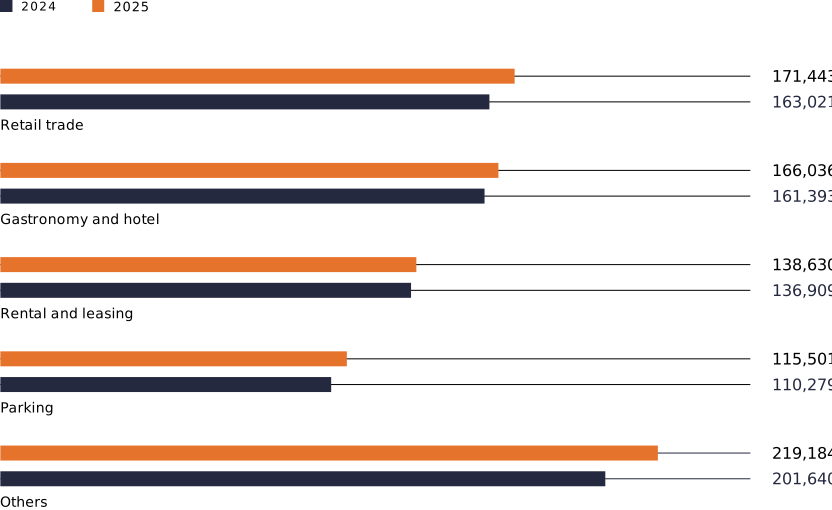
In relation to revenue in 2025, only the revenue from the retail trade is still lower than the figures recorded in 2019. One reason for this is that Munich Airport is seeing fewer wealthy passengers from destinations such as China and Russia.
Other revenues include global management, consulting and training services for the aviation industry, as well as utility services and fuel.
After more than 30 years of operation, the need for renovation of the buildings from the first expansion phase of Munich Airport continues to grow. Accordingly, expenses for refurbishment, optimization, and conversion measures increased considerably by TEUR 21,731 to TEUR 160,413. The remaining items in the cost of materials rose mainly as a result of the significant increase in air traffic. Overall, the cost of materials increased significantly by TEUR 61,952 or 11.4%.
Personnel expenses at Munich Airport increased substantially by 10.5% to TEUR 659,671 as a result of collectively agreed pay rises and effects from the industry-wide collective agreement for ground handling services. The number of employees also grew from an average of 8,821 to 9,031 persons.
At TEUR 131,282, other expenses were a noticeable 6.6% higher than the previous year’s level. Reasons behind the increase were primarily higher rental and lease expenses as well as expenses from insurance payments.
The financial result, including the result from companies measured using the equity method, improved significantly by TEUR 19,683 to TEUR –72,152, where this was caused primarily by the decrease in interest expenses on the shareholder loans and the remeasurement of the financial liabilities from interests in partnerships.
The change in income taxes can be attributed to the positive earnings in the Group as well as the measurement of the deferred taxes in connection with the Act on an Immediate Tax Investment Program to Strengthen Germany as a Business Location (Gesetz für ein steuerliches Investitionssofortprogramm zur Stärkung des Wirtschaftsstandorts) that was adopted in 2025.
Assets and financial position
Assets – Liquidity continues to be guaranteed
in TEUR
Change | ||||
|---|---|---|---|---|
As of Dec. 31, 2025 | As of Dec. 31, 2024 | Absolute | Relative in % | |
Non-current assets | 5,567,692 | 5,379,804 | 187,888 | 3.5 |
Current assets1) | 229,495 | 229,944 | −449 | −0.2 |
thereof cash and cash equivalents | 12,167 | 8,756 | 3,411 | 39.0 |
Assets | 5,797,187 | 5,609,748 | 187,439 | 3.3 |
Equity | 2,020,243 | 1,851,140 | 169,103 | 9.1 |
Other non-current liabilities2) | 3,203,829 | 2,813,167 | 390,662 | 13.9 |
Other current liabilities2) | 573,115 | 945,441 | −372,326 | −39.4 |
Equity and liabilities | 5,797,187 | 5,609,748 | 187,439 | 3.3 |
including assets held for sale
including financial liabilities from partnerships and liabilities related to assets held for sale
The increase in non-current assets (+TEUR 187,887) related primarily to the property, plant and equipment for own use, which totaled TEUR 139,987. As a result of several building projects, such as the expansion of Terminal 1 and the ibis Styles hotel, advance payments and assets under construction increased by a total of TEUR 215,402 to TEUR 891,582. Investments in property, plant and equipment for own use at Munich Airport totaled TEUR 370,365 in 2025. These were offset by depreciation of TEUR 191,264.
The increase in equity to TEUR 2,020,243 can mainly be attributed to the EAT for the 2025 fiscal year of TEUR 169,319.
The changes in other liabilities can essentially be assigned to the financing division. Non-current liabilities include TEUR 475,000 in loans that were obtained at the end of November 2025.
The decline in non-current liabilities can primarily be attributed to punctual repayments of loans and loans to shareholders. Further loan repayments fall due in 2026.
in TEUR
Change | ||||
|---|---|---|---|---|
As of Dec. 31, 2025 | As of Dec. 31, 2024 | Absolute | Relative in % | |
Subscribed capital | 306,776 | 306,776 | – | – |
Reserves | 187,814 | 163,161 | 24,653 | 15.1 |
Other equity | 1,525,632 | 1,381,182 | 144,450 | 10.5 |
thereof profit/loss of the year | 169,320 | 64,374 | 104,946 | > 100.0 |
Non-controlling interests | 21 | 21 | – | – |
Equity | 2,020,243 | 1,851,140 | 169,103 | 9.1 |
Financial liabilities from interests in partnerships | 455,955 | 431,245 | 24,710 | 5.7 |
Shareholder loans1) | 10,524 | 257,749 | −247,225 | −95.9 |
Fixed-rate loans | 1,760,689 | 1,866,277 | −105,588 | −5.7 |
Floating-rate loans | 819,804 | 408,628 | 411,176 | > 100.0 |
Loans | 2,580,493 | 2,274,905 | 305,588 | 13.4 |
Derivatives | 984 | 3,018 | −2,034 | −67.4 |
Other liabilities | 728,989 | 791,691 | −62,702 | −7.9 |
Financial liabilities | 3,776,944 | 3,758,608 | 18,336 | 0.5 |
Equity ratio | 34.8 % | 33.0 % | ||
including interest
The equity ratio increased significantly by 1.8% to 34.8% on account of the EAT in the 2025 fiscal year.
The main terms of Munich Airport’s current and non-current financial liabilities can be found in the table below:
As of December 31, 2025
Method of funding | Currency | Interest rate | Residual debt in TEUR | Interest rate in % | |
|---|---|---|---|---|---|
from | to | ||||
Financial liabilities from interests in partnerships | EUR | Earnings-based | 455,955 | – | – |
Loans | EUR | Floating-rate | 819,535 | 3M- and 6M-EURIBOR plus margin | |
Loans | EUR/USD | Fixed-rate | 1,758,009 | 0.16 | 5.95 |
The loans have a final due date of 2026 to 2037.
The loans are subject to the usual non-financial covenants, including pari passu declarations. In addition, there are other general conventional agreements concerning repayment in the event of changes in the shareholder structure. No financial covenants have been agreed.
In addition, unutilized credit lines as well as overdrafts and money market lines totaling TEUR 305,855 were available as of December 31, 2025.
Munich Airport counters risks from interest rate and exchange rate fluctuations by hedging with interest rate payer swaps and forward exchange transactions. The interest rate hedges are recognized as hedging relationships.
Liquidity
IN TEUR
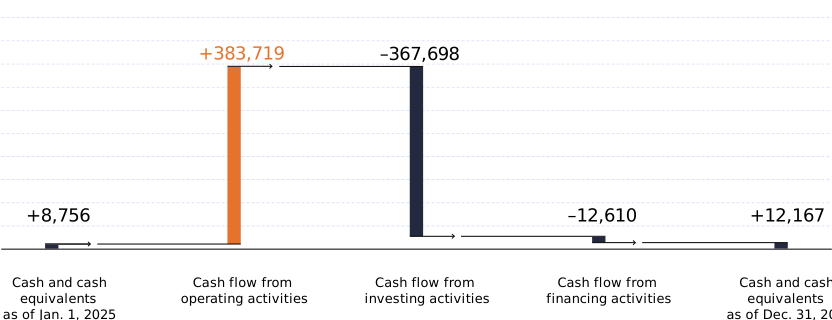
Sufficient cash and cash equivalents were available from the cash flow from operating activities in 2025 to ensure the company’s liquidity in the business operations.
Cash outflows from investing activities resulted primarily from the acquisition and production of property, plant and equipment and from the various construction projects, such as the construction of the ibis Styles hotel and the T1 pier.
Cash outflows from financing activities resulted from lower loan repayments as well as interest payments. These payments were hedged at all times and were made from the very high cash flow from operating activities.
Target achievement and overall assessment Summary
Compared with the previous year and the forecast development, the key financial and non-financial performance indicators trended as follows:
Actual | Forecast | Actual | ||||
|---|---|---|---|---|---|---|
2024 | from | to | 2025 | |||
in % | in % | |||||
EBT (in TEUR) | 103,099 | Increase | 10.0 | 30.0 | 146,656 | Exceeded |
CO₂ reductions (in tonnes)1) | 3,047 | Decrease | −40.0 | −30.0 | 4,368 | Exceeded |
Passenger Experience Index (PEI)2) | 80.9 | Increase | 0.0 | 1.4 | 82.0 | Achieved |
Lost Time Incident Frequency (LTIF)3) | 14.3 | Increase | 0.0 | 19.0 | 16.9 | Achieved |
The average consumption values from 2017 are used to calculate the CO₂ reductions that are generated from the replacement of vehicle types.
The value refers to the question about overall satisfaction.
Applies to FMG and AE.
Earnings before taxes (EBT)
Munich Airport’s EBT exceeded the planned figure in the 2025 fiscal year. This was mainly thanks to the substantial recovery in traffic volume and the resulting increase in revenue in all divisions.
CO₂ reductions
Binding targets are defined annually in order to achieve the long-term climate protection goals. They include stipulations regarding the implementation and recognition of efficiency measures as well as special targets for the development of CO₂ reduction technologies.
Significant savings were achieved in particular in the ventilation and air conditioning systems and in the lighting systems. In addition to the use of highly efficient electric motors, sensor solutions such as presence detectors and ambient light sensors contribute to reducing the energy demand of airport infrastructure. Overall, this resulted in savings of 1,899 tonnes of CO₂. The ongoing electrification of the vehicle fleet has led to further savings totaling 2,469 tonnes of CO₂.
Compared to the previous year, the emission factor used for electricity in accordance with the German Environment Agency (UBA) fell by around 19% to 0.371 gCO₂/kWh of electricity (2024: 0.459 gCO₂/kWh of electricity). This translates into lower CO₂ reductions than in the previous year from the same volume of energy saved.
Munich Airport had set itself the goal of saving 30% to 40% of CO₂ in 2025. The efficiency measures that were completed in 2025 produced annually recurring savings of 4,368 tonnes of CO₂, thus exceeding the target that was set.
Passenger Experience Index (PEI)
Munich Airport once again recorded a rise in the PEI in 2025. This improvement can be attributed mainly to ongoing improvements in operating processes and enhancements in the quality of stay. In particular, a high level of quality in baggage handling was ensured through close coordination among all companies involved in handling processes and increased staffing levels.
In order to meet the requirements of a 5-star airport, Munich Airport implemented further measures in 2025 with the aim of improving the passenger experience. Following three years of construction, the central security checkpoint in Terminal 2 was fully converted to innovative CT technology in April 2025. The installation of mobility monitors, the expansion of seating facilities in the arrival area of Terminal 2, and the creation of an animal relief area in Terminal 1 also contributed to an improved quality of stay.
Lost Time Incident Frequency (LTIF)
In 2025, the LTIF for FMG and AE amounted to 16.9 and was thus within the forecast range of 0% to 19%. The value increased by 2.6 from 2024. This increase is attributable to a rise in the number of occupational accidents (+27%) due to non-recurring effects, as well as a simultaneous increase in hours worked (+7%). A comparison of the LTIF for 2025 with the 2019 figure (21.7) – before the outbreak of the Covid-19 pandemic – reveals a sharp decrease in incident frequency.
ifo Institute, Economic Forecast Winter 2025, December 2025, pp. 2, 3, 8; German Council of Economic Experts, Annual Report 2025/26, November 2025, p. 4
ifo Institute, Economic Forecast Winter 2025, December 2025, pp. 6, 8; German Council of Economic Experts, Annual Report 2025/26, November 2025, pp. 27, 39
ifo Institute, Economic Forecast Winter 2025, December 2025, pp. 2, 8; German Council of Economic Experts, Annual Report 2025/26, November 2025, pp. 33, 39; Kiel Institute for the World Economy, Kiel Economic Outlook no. 128 (2025 | Q4), December 2025, pp. 4, 11, 12
ifo Institute, Economic Forecast Winter 2025, December 2025, p. 8; German Council of Economic Experts, Annual Report 2025/26, November 2025, p. 39
ifo Institute, Economic Forecast Winter 2025, December 2025, pp. 3, 8; German Economic Institute, Cologne, IW-Report 65/2025; December 2025, p. 21
ifo Institute, Economic Forecast Winter 2025, December 2025, p. 8
ifo Institute, Economic Forecast Winter 2025, December 2025, pp. 12, 20, 37; German Council of Economic Experts, Annual Report 2025/26, November 2025, pp. 50, 52, 59, 62, 72
IATA, Air Passenger Market Analysis, December 2025 /Different calculation of capacity utilization according to airline standard, seat kilometer sold/seat kilometer offered leads to higher values, no comparability with seat capacity utilization (airport method).
IATA, Air Cargo Market Analysis, December 2025
ACI World Airport Traffic Forecast 2025–2054, January 2026
Eurocontrol, Forecast Update 2025–2031
BDL, Entwicklung des Luftverkehrs im Jahr 2025 (Development of Air Traffic in 2025), February 18, 2026, p. 4 ff.
ADV, ADV-12.2025_MoSta-Flughäfen
HDE, HDE Annual Press Conference 2025, February 2, 2026
ifo Institute, Business Climate Index for Germany, January 28, 2026
DEHOGA (hotel and restaurant association), Figures for 3rd quarter of 2025, November 25, 2025
DEHOGA (hotel and restaurant association), Figures for 3rd quarter of 2025, November 25, 2025
Media Perspektiven, press release 5/2026 «Lineares TV verliert deutlich» («Linear TV records substantial losses»), February 2026
Colliers, press release «Großnutzeraktivität in München nahe Vorkrisenniveau – Gesamtmarkt mit leichtem Minus im Jahresvergleich» («Major user activity in Munich close to pre-crisis level – Overall market registers slight decline year-on-year»), January 12, 2026, p. 1
Colliers, press release «Großnutzeraktivität in München nahe Vorkrisenniveau – Gesamtmarkt mit leichtem Minus im Jahresvergleich», January 12, 2026, p. 1
Colliers, press release «Großnutzeraktivität in München nahe Vorkrisenniveau – Gesamtmarkt mit leichtem Minus im Jahresvergleich», January 12, 2026, p. 1 f.
Colliers, press release «Großnutzeraktivität in München nahe Vorkrisenniveau – Gesamtmarkt mit leichtem Minus im Jahresvergleich», January 12, 2026, p. 2
Colliers, press release «Großnutzeraktivität in München nahe Vorkrisenniveau – Gesamtmarkt mit leichtem Minus im Jahresvergleich (Large-scale tenant activity in Munich is close to pre-crisis levels – overall market shows a slight year-over-year decline)», January 12, 2026, p. 2
ADV, ADV-12.2025_MoSta-Flughäfen
ACI, Munich Airport Ranking 2025, as at February 2026
SKYTRAX, World’s Best Airport Hotels 2025, April 2025