Outlook, opportunities and risks report
Outlook Summary
Economic and industry-specific conditions
The impacts of the Middle East conflict are reflected in the following statements on the outlook for 2026 insofar as the relevant information or forecasts was or were available or had materially changed by the time the outlook was drawn up. The impacts on the international and Germany economy are already noticeable, but based on current knowledge they still cannot be estimated precisely.
The development of the global economy thus remains marked by geopolitical tensions and increasing protectionism. In particular, US tariff policy is likely to continue having noticeable effects over the forecast period. After an increase in global trade in 2025 that benefited from anticipatory effects, a slight decline is expected for 2026, followed by moderate growth in 2027 that will, however, lag behind overall macroeconomic dynamics. Uncertainty surrounding the US trade policy remains. In December 2025, the ifo Institute expected growth rates of 2.4% and 2.6% for 2026 and 2027, respectively30).
The economic output of industrialized nations is likely to increase by 1.6% in 2026. GDP growth of 2.2% is expected for the USA. Significant expansionary stimulus will stem here from the ongoing boom in AI as well as from the monetary and fiscal policy with falling base rates, tax cuts, and higher spending on the military and border control. Private consumption, on the other hand, is likely to develop less dynamically on account of increased price pressures and a comparatively weak labor market. In the United Kingdom, the economy is expected to grow by 0.9% in 2026. The relaxation of monetary policy is likely to have a positive impact over the forecast period, while financial policy will have a more restrictive effect, among other things as a result of tax hikes31).
According to the current economic forecast, the group of emerging markets will achieve economic growth of 4.0% in 2026. The Chinese economy is likely to grow at a rate of 4.5%, but the situation in the real estate sector there remains tense and is weighing on domestic demand. The export business, however, will continue to support the economy. In Asia, it is primarily the Indian economy that is contributing to the positive growth rates. A growth rate of 6.3% is forecast for 202632).
In the eurozone, economic output is likely to grow by 0.9%. Compared to 2025, this suggests that growth momentum is flagging. While rising real incomes and more favorable financing conditions are supporting private consumption and investment activity, the export sector remains under pressure, weighed down by US tariffs, the strong euro, and growing competition from China. GDP growth of 0.6% is expected for France in 2026. In Italy and Spain, economic output is likely to increase by 0.7% and 2.3%, respectively.
German GDP will likely undergo only a slow recovery in 2026 and is expected to grow by 0.8%. The heavily export-oriented industry is suffering in particular from structural changes, including decarbonization, digitalization, demographic change, and geopolitical risks. As a result, its competitiveness has deteriorated and export performance has decoupled from the global economy. Moreover, US tariffs, a strong euro and rising competition from China are dampening foreign trade. Gross fixed capital formation is expected to increase by 1.6%, while imports and exports are expected to rise by 1.6% and 0.6% respectively. The construction sector is likely to experience a slight recovery of 0.9%. The inflation rate is expected to remain stable at 2.2%, while the unemployment rate will probably stay at 6.3%33).
The oil price (Brent) was lower in 2025 than in the previous year. The average price in 2025 was USD 68.4 per barrel (2024: USD 79.7 per barrel)34). The ifo Institute assumes a quick end to the Middle East conflict, with oil prices rising temporarily in the months of March to May to USD 80 per barrel on average. After the conflict has been resolved, commodity prices will quickly fall again, without, however, reaching the levels before the war broke out35).
The demographic and general economic conditions in Bavaria and in the airport catchment area suggest that transportation demand will increase in the medium to long term. According to the population projection of the Bavarian State Statistical Office, Bavaria’s population will grow by 4.3% up to 2043. The population in the Munich region will increase especially sharply – by 4.2% in the state capital and by 2.2% in the Munich administrative district. Several of the fastest-growing administrative districts are located in the immediate vicinity of the airport, such as Landshut (+10.6%), Dingolfing‑Landau (+9.6%), Neuburg‑Schrobenhausen (+9.4%) and Mühldorf am Inn (+9.3%). The city and administrative district of Augsburg are also recording vigorous growth of +6.1% and +9.4%, respectively36).
Global passenger traffic exceeded the 2019 level again for the first time in 2024. In 2025, passenger volume increased by 3.7% to 9.8 billion travelers. Before the outbreak of the Iran war, ACI expected a substantial rise to 10.2 billion passengers in 202637). In a letter to the European Commission dated April 9, 2026, the European airport association ACI Europe warned of kerosene shortages as a consequence of the triggered energy crisis, which would result in flight cancellations.38)
Forecast course of business
Like other sectors, the aviation industry is affected by the repercussions of the Middle East conflict. Restrictions on airspace, rising oil prices, and subsequently higher ticket prices could result, even beyond the duration of the conflict, in booking hesitancy or a diversion of passenger flows and have a negative impact on the business and earnings performance of the Munich Airport Group in the 2026 fiscal year.
Munich Airport assumes that the repercussions of the Middle East conflict will influence the Group’s economic performance in all business units in 2026. How long the impacts will last cannot be estimated at present, as this will largely depend on the actual course of the conflict and how the supply side and consumers will react.
At present, Management expects traffic volumes to decline compared to the 2025 fiscal year.
In addition to the impacts of the Middle East conflict on traffic development and the accompanying slight decline in revenue from airport charges, the Commercial Activities business unit, which includes retail and catering outlets, has also been affected to a limited extent. In contrast, the Real Estate business unit is expected to record a large increase resulting from the leasing of office premises and additional space in the T1 pier.
Nevertheless, Munich Airport expects revenue to remain at the previous year’s level overall.
Against the background of the expected traffic situation, the Group assumes that earnings before taxes (EBT) will experience a year-on-year decrease in the 2026 fiscal year even after extensive countermeasures have been implemented.
All expenses and cash outflows and all potential for increasing revenue are being reviewed and possible optimizations are being put into practice to reinforce the results of operations and the operating cash flow.
The liquidity and financial planning undergoes a regular validation process. Possible financing and investment requirements are identified and covered as needed. The liquidity in the forecast period is secured. Planned investment and expense measures can be adapted flexibly where necessary in the forecasting window in view of any financing measures that are envisaged. This ensures that Munich Airport always has the necessary liquidity.
Projected major financial and non-financial key performance indicators:
2025 | 2026 | |||
|---|---|---|---|---|
Actual | Forecast | |||
from | to | |||
in % | in % | |||
EBT (in TEUR) | 146,656 | Decrease | −50.0 | 0.0 |
CO₂ reductions (in tonnes)1) | 4,368 | Decrease | −57.0 | −47.0 |
Passenger Experience Index (PEI)2) | 82.0 | No change | 0.0 | 0.0 |
Lost Time Incident Frequency (LTIF)3) | 16.9 | Decrease | −14.0 | 0.0 |
The average consumption values from 2017 are used to calculate the carbon reductions that are generated from the replacement of vehicle types.
The value refers to the question about overall satisfaction.
Applies to FMG and AE.
Earnings before taxes (EBT)
Overall, Munich Airport expects EBT to decline. The exact figure will depend in particular on the intensity and duration of the Middle East conflict and its impact on air traffic. Munich Airport thus expects EBT to remain below the pre-crisis level in 2026 (2019: TEUR 256,822).
CO₂ reductions
Energy savings of a comparable scale are forecast for 2026. The measures that are planned are aimed primarily at further reducing the energy consumption of electrical equipment. The CO₂ reductions resulting from a drop in the emission factor for electricity will turn out to be lower, however.
Passenger Experience Index (PEI)
The forecast PEI represents a high level of ambition. Despite a generally very good operating performance, the overall satisfaction figure of 82.0 was only achieved in 2025. For 2026, this means that considerable efforts will continue to be necessary to ensure the high level of quality.
Lost Time Incident Frequency (LTIF)
As air traffic volumes grow, forecasting the Lost Time Incident Frequency is challenging. In addition to the expansion of its workforce and the related increase in working hours performed, Munich Airport plans to extend the LTIF to additional subsidiaries.
The LTIF forecast for 2026 takes into account not only these extensive changes, but also the empirically high volatility and the associated fluctuations in this value. Factors influencing this volatility include varying weather conditions, staff turnover, new hires, and particularly the proportion of hours spent working from home.
The project to strengthen the occupational safety culture at AE was continued in order to reduce the LTIF over the long term. The objective is to systematically develop and raise the awareness among all employees of the need for conduct that is always safety-focused in all relevant work situations, as the majority of occupational accidents are caused by unintentionally unsafe behavior.
Opportunities and risks report Summary
Opportunities
As an international air traffic hub, Munich Airport competes with other major passenger airports. Functional and targeted opportunity management is of central importance for maintaining and expanding the airport’s market position. This is an integral part of the strategy and planning processes at Munich Airport.
Opportunities are future developments and events that may lead to a positive deviation from planning or strategic targets. Both external (for example, changes in the market environment) and internal opportunities (for example, programs to increase efficiency) are considered.
All divisional heads of FMG and the CEOs of the subsidiaries and associated companies are responsible for developing and implementing measures to take advantage of opportunities. In this, they are supported by the corporate division Finance and Controlling. In addition, all employees of FMG in the business units and their subsidiaries are generally required to identify opportunities in the course of their daily work and report them to their supervisors.
As a basic principle, Munich Airport strives to strike a balance between opportunities and risks. If it was highly likely at the time of planning that an opportunity would arise, this was already included in the 2026 forecast or in the medium- and long-term planning. The opportunities presented therefore focus on future developments or events that could lead to a positive deviation for Munich Airport from the forecast and the medium and long-term planning.
The evaluation of opportunities is based on the risk assessment system. The economic benefit resulting from the opportunities and the probability of occurrence are divided into the following categories analogous to the risks under consideration:
Economic advantage | Amount in € |
|---|---|
Low | 1 – 5 million |
Medium | 5 – 30 million |
High | 30 – 150 million |
Very high | >150 million |
Probability of occurrence | Percentage intervals |
|---|---|
Very low | 5–10% |
Low | 10–25% |
Medium | 25–50% |
High | > 50% |
In contrast to risks, the probability of occurrence and financial impact (economic advantage) are not shown separately but are combined in the «high relevance» and «low relevance» opportunity categories.
Since Munich Airport is confronted in some cases with very long planning periods, the opportunities are also categorized by timing as short-term, medium-term, or long-term.
Maturity | Period |
|---|---|
Short-term | <2 years |
Medium-term | 2 – 5 years |
Long-term | >5 years |
Compared with the previous year, the inclusion of the «Digitalization and artificial intelligence» opportunity led to a change in the structuring of the identified opportunities as at December 31, 2025. The content description and assessment of the remaining opportunities have been revised.
Opportunities | Rating | Time of occurrence | Summary of the measures |
|---|---|---|---|
Market development | high relevance | short-, medium-, and long-term |
|
Rail access | high relevance | long-term |
|
Regulation and legislation | high relevance | long-term |
|
Economic development | high relevance | short- and medium-term |
|
Interest rate and exchange rate development | low relevance | short- and medium-term |
|
Implementation of climate protection measures (CO₂ strategy) | low relevance | long-term |
|
Internal process and efficiency improvements | low relevance | short-term |
|
International business | low relevance | medium- to long-term |
|
Real Estate | low relevance | medium- to long-term |
|
Employer attractiveness | low relevance | short- and medium-term |
|
Digitalization and artificial intelligence | low relevance | medium- to long-term |
|
Market development
Airline industry trends are of particular importance for traffic volumes at airports. Airlines and airports cut staff and aircraft fleets were downsized during the Covid-19 pandemic. Demand for air travel has continued to increase sharply since the pandemic restrictions were lifted. For this reason, the aircraft and seating capacity of the airlines remains inadequate.
The resulting imbalance between supply and demand led to higher ticket prices. If this situation eases and ticket prices fall again, it could lead to a higher-than-expected growth in passenger volumes. Deutsche Lufthansa has now reactivated its entire fleet. It also decided to base all of its Airbus A380 aircraft in Munich. If the Lufthansa Group bases more machines than planned at Munich Airport in the future, this would have an unexpectedly positive effect on passenger figures and thus on the company’s result.
Munich Airport implements intensive quality management and is one of only a few 5-star airports in the world. It has an extremely attractive catchment area in terms of both business and private travel, and it has operated a professional airline acquisition service for many years. In Deutsche Lufthansa, the company has an important partner that operates a hub at the Munich location and intends to maintain it in the future. In addition, cooperation is based on joint investments and long-term cooperation agreements.
If the airline market grows more strongly than expected, it would result in above-plan earnings in the short and medium term. Although a scenario of this kind appears uncertain on account of the current situation, the resulting opportunity must be rated as «high relevance» because of its impact on the further development of the company.
Rail access
There have been calls for some time now, in particular at the European but also at the national level for the various modes of transport to be interlinked as efficiently as possible, thus conserving resources. To this end, it makes sense to optimally connect the major European hub airports in particular to the rail infrastructure. In the context of the intensively conducted climate protection debate, this topic has gained importance in recent years. In the meantime, moreover, the European Union has adopted a decision stipulating that airports with an annual volume of more than 12 million passengers must be connected to the long-distance rail network by 2040.
With regard to the rail access to Munich Airport, several projects, including the Erdinger Ringschluss, the Walpertskirchener Spange, the second main line in Munich, and the Munich-Mühldorf-Freilassing/Salzburg Line 38 extension, are currently being planned or implemented. Should an adequate connection to the long-distance rail network also be established, Munich Airport could be efficiently integrated into a future multimodal transportation system. This would expand the passenger catchment area and consequently result in an above-plan development of earnings.
Regarding the long-distance rail connection, preparatory investigations for inclusion in the federal transport infrastructure planning process are currently underway in collaboration with Deutsche Bahn, Deutsche Lufthansa and the Bavarian Ministry of Housing, Building and Transport. In this connection, the statements made on the expansion of the rail network in the 2025 coalition agreement of the new federal government represent an opportunity to implement rail access at Munich Airport. According to the coalition agreement, Germany’s airports are set to be expanded and upgraded in order to increase capacity and improve efficiency.
Munich Airport has the necessary expertise on this subject and is in intensive contact with regional and national authorities as well as with Deutsche Bahn. The goal here is to realize an optimal connection of the airport to the long-distance rail network, which would bring a considerable economic advantage. The resulting opportunity must be rated as «high relevance» in the long term.
Regulation and legislation
Air transport has historically been a highly regulated market. Accordingly, laws, ordinances and international agreements are still decisive factors influencing air traffic today. The introduction of new regulations and amendments to existing ones may entail risks, but also present opportunities for market actors.
In an international comparison, German airports face a cost disadvantage due to the high level of government taxes and fees. Due to their national character, the German aviation surcharge in particular and the high air traffic control and security fees have effects that distort competition in the European aviation market. As a result, air travelers from areas close to borders are increasingly choosing to use airports abroad as their point of departure and airlines are deploying aircraft in other countries more frequently. If the taxes and fees were to fall overall, competition-distorting effects could be reduced. This could lead to an increase in traffic at Munich Airport.
The federal government last increased the aviation surcharge on May 1, 2024. Significant political and social resistance to this has now emerged, however. The federal government is therefore planning to cancel the last increase in the aviation surcharge with effect from July 1, 2026. The probability that the outcome described above will materialize has consequently increased significantly in comparison with the previous year.
In recent years, the discussion on the creation of a Single European Sky has gained momentum. In addition to the introduction of uniformly high safety standards, the goal is to expand airspace capacity and achieve more economical supranational cooperation between the national air traffic control organizations. In concrete terms, the goal is, among other things, to enable airlines to operate more economical flight routes (direct air routes). More efficient flight routes could produce significant kerosene savings and thus reduce CO₂ emissions by up to 10%. While the latter could bring a positive image boost for air travel as a whole, the former would have a positive impact on demand for air travel due to lower costs. However, Single European Sky is an extremely complex issue, since it affects the national sovereignty of the individual European states. Accordingly, possible solutions must be developed by all national and European players in dialogue with industry.
In order to properly utilize opportunities arising from regulation and legislation, Munich Airport uses the expertise of the Communication & Politics corporate division and is also involved in various aviation associations, such as the BDL. The central objective here is to help shape important regulations for the aviation sector and counteract competition-distorting effects.
In summary, the opportunities arising from regulation and legislation are currently rated as «high relevance».
Economic development
The growth of air traffic is closely connected to the growth of the global economy. At the moment, geopolitical crises and increasing protectionism are weighing on the global economy. In particular, the current US trade policy with its numerous tariffs is weakening production and world trade – especially in the EU and in Germany as important US trade partners. In addition, megatrends such as decarbonization, digitalization, and demographic change are leading to far-reaching structural changes, to which the German economy is only slowly responding. Demographic change, industry that accounts for a large share of macroeconomic value creation, red tape, and outdated infrastructure are all exacerbating the challenges. Forecasts assume that these problems will also persist in the future and that US trade policy will remain unchanged. A stronger euro, persistently high energy costs, and increasing competition from China are additionally putting a brake on industry and foreign trade. The uncertainty felt by consumers is dampening private consumption, and the mood among consumers and companies remains subdued. The moderate growth expected in the years to come will be driven primarily by fiscal stimulus from the special funds. Inflation has normalized, while monetary policy is less restrictive than before.
In addition to the influence they have on economic development, protectionist trade practices also have a dampening effect on the development of global air traffic trends, as this depends heavily on the degree of globalization of the global economy. Moreover, geopolitical conflicts are having an adverse impact on the growth in air traffic.
Despite the current diverse and predominantly negative factors influencing the economy, it remains possible that it will perform significantly better than expected. Should the US administration unexpectedly cancel protectionist measures and focus increasingly on compliance with relevant trade agreements, this could significantly boost economic and air traffic growth. Similarly, the de-escalation of geopolitical conflicts or the swifter adaptation of the German economy to structural changes could deliver positive stimuli. Business and consumer sentiment could brighten and thus provide a boost to macroeconomic performance and air traffic.
Different divisions of Munich Airport intensively monitor all relevant economies worldwide. In this way, potential for Munich Airport’s various business units can be identified and appropriate measures can be initiated to exploit any opportunities.
Economic development is one of the key factors influencing air traffic. Any economic growth that exceeds the forecast scale would consequently have a significantly positive effect on Munich Airport’s earnings performance. The resulting opportunity must therefore be rated as «high relevance».
Interest rate and exchange rate development
Favorable interest rate and exchange rate development may have a positive impact on Munich Airport’s financial result. Accordingly, currency effects from the translation of results not denominated in euros into the Group’s functional currency (euros) may have a positive impact on the financial results.
In the retail business at the Munich Airport, international customers from outside the eurozone play a special role due to their retail spending, some of which is significantly above average. Internal analyses have shown that fluctuations in exchange rates have a significant impact on retail revenues. If the euro exchange rate against the relevant foreign currencies remains low, this offers the potential for an above-average earnings development.
If interest rates fall more sharply than was assumed in the planning period, this would have a positive effect on Munich Airport’s EBT.
Overall, the opportunity arising from interest rate and exchange rate development must be rated as «low relevance» in the short and medium term because of the current economic situation.
Implementation of climate protection measures (CO₂ strategy)
Munich Airport is pursuing the climate objective of net zero emissions by 2035. It is aiming to reduce the CO₂ footprint it can control to net zero emissions through a combination of reduction and removal measures at a ratio of 90:10. To this end, measures are implemented in the subject areas of energy supplies, technical airport equipment, buildings, and the vehicle pool. Achieving these targets is associated with costs. Increasing efficiency gains and improved benefits can be recorded in the areas of renewable energy generation and energy savings. If this development accelerates, the costs for achieving Munich Airport’s climate target could be lower than expected. The Group environment department and the technology service division, as well as strategic sustainability management at the airport, monitor trends in this direction.
In the long-term, this could lead to higher than expected earnings. Despite changing political incentive and/or sanction mechanisms, the resulting opportunity is rated as «low relevance» due to the comparatively low earnings effect.
Internal process and efficiency improvements
Munich Airport continually makes use of new opportunities and measures to position itself as sustainable and efficient. In addition to organizational improvements, further increases in efficiency are assumed in the medium and long-term planning. Ambitious targets are defined here – despite the currently challenging macroeconomic environment. The probability of a significantly higher-than-planned performance has to be assessed as low. The resulting opportunity is therefore rated as «low relevance».
International business
Despite the existing challenges in the aviation industry, the international business of Munich Airport operates in a growth market: despite the slump during the Covid-19 pandemic, passenger volume is set to double from 2018 to 2040 at an average annual global growth rate of 3.9%, according to IATA. The importance of international diversification for ensuring the sustainable value growth of Munich Airport continues to be highly relevant precisely because of the increasing challenges in the German and European home market.
As a result, the international business of Munich Airport enjoys long-term growth opportunities regarding its management, consulting and training services for the aviation industry.
At the international level, the trend towards involving private companies in the management and operation of previously government-run airports continues. Munich Airport has established itself in the market in the areas of concessions and professional services. New strategic partnerships can strengthen the local market position in important target markets and ensure positive business development.
To this end, Munich Airport closely monitors all relevant markets and developments, conducts professional customer acquisition and continuously adapts its product and service portfolio to market requirements. In this way, opportunities that arise can be optimally exploited.
In the medium- and long-term, this could lead to higher-than-expected earnings. The resulting opportunity must be rated as «low relevance», however, on account of the comparatively weak effect of earnings.
Real Estate
The current large-scale economic, political, and ecological challenges are putting companies in Germany under a great deal of pressure to innovate and collaborate. Moreover, the pandemic triggered major changes in the labor market, which will necessitate a reconfiguration of workplaces. This could continue to lead to a change in the requirements, in particular for cooperative sites.
With its «LabCampus» project, Munich Airport is creating a new type of innovation center that provides lease premises and that focuses on cross-sector collaboration, joint development, testing, presentation and realization. New possibilities for attracting customers will result in particular from the signing of the lease agreement with TUM and the establishment of the TUM Convergence Center. Other opportunities will result in the long run from the opening of an event arena directly next door to the LabCampus at Munich Airport. The arena will enhance the attractiveness of the area for new customer groups from the entertainment sector, which could lead to higher-than-expected earnings over the long term.
Munich Airport keeps a close eye on all relevant markets and conducts professional customer acquisition activities in order to make the best possible use of opportunities that arise in the market. The resulting opportunity is currently rated as «low relevance» due to the long-term impact horizon.
Employer attractiveness
A positive image as an employer is an important factor for the development of Munich Airport. Despite the persistently strained economic situation, there is a shortage of qualified skilled labor in Germany. Munich Airport enjoys a good image as an employer in public perception and offers long-term prospects in an attractive working environment. The majority of Group companies offer their employees the benefits of employment relationships safeguarded by collective agreements. Numerous programs, including for personal development, health promotion, and work-life balance (e.g. a company kindergarten), help Munich Airport stand out as an employer.
Should Munich Airport succeed in the next few years in maintaining its attractiveness as an employer at this high level, this may also have a more positive influence on the earnings performance than expected. Personnel costs could be reduced through high employee retention rates and low levels of absenteeism due to illness, while new sources of revenue can be tapped through the use of suitable staff.
Munich Airport has conducted professional employer marketing and intensive recruitment activities for a long time, continuously develops measures to further strengthen its successful employer brand, and can consequently record a constantly increasing number of job applications. Opportunities can therefore be optimally exploited in this area.
In summary, the opportunities can continue to be rated as «low relevance» as in the previous year.
Digitalization and artificial intelligence
The use of digital solutions and AI presents opportunities for the business development of Munich Airport.
Munich Airport is currently working on the introduction of advanced digital solutions, including for example a «data lake» (central storage location for large volumes of data from a wide variety of sources) and the targeted use of AI. This will produce considerable potential in the long term for optimizing costs, enhancing quality, and increasing revenue. Numerous processes can be optimized and new innovative solutions can be developed by breaking up data silos and connecting and exploiting databases.
Both more precise management of passenger, cargo, and aircraft handling and the further optimization of purchasing and assortment planning in the retail and gastronomy segments appear equally possible in this connection. In particular, repetitive tasks could be automated here. In addition, the use of AI could result in innovative product and service offers and thus increase revenue per passenger.
Should Munich Airport succeed in assuming a pioneering role in the area of digitalization and AI within the airport sector and consequently further enhance customer satisfaction and competitiveness, this could also play a positive part in developing passenger volumes.
Munich Airport is pursuing a targeted digitalization strategy and has developed the expertise necessary in various corporate divisions to make the best possible use of opportunities that arise in this area.
In the medium- to long-term, the new technologies thus offer the potential to develop earnings to a level that is higher than planned. Because of the already ambitious plans in the area of IT and digitalization, the opportunities arising here are rated as «low relevance».
Risk management system
The Executive Board of FMG and all subsidiaries and affiliated companies is responsible for the early detection and prevention of risks that jeopardize the continuity of Munich Airport and the investments. Group Management has overall responsibility for an effective risk management system and lays the essential foundation for this system by defining and communicating the corporate strategy and targets. It formulates specifications for the risk management process and the organizational structure of the risk management system.
The goal of the risk management system is to identify events and developments that could have a negative impact on the achievement of strategic and operational targets in good time and develop suitable countermeasures. All dimensions of the business activities are taken into account.
The general principles of risk management in the Group as well as the tasks and responsibilities of the relevant employees are set out in the risk management guideline on the basis of the internationally recognized «COSO ERM» framework model (Committee of Sponsoring Organisations of the Treadway Commission – Enterprise Risk Management).
The Risk Management Committee, which reports directly to the Executive Board, serves as a management, control and supervisory body. It consists of the Executive Board, the heads of the Aviation and/or Aviation Operation, Commercial Activities, and Real Estate business units, the heads of the Legal, Corporate Bodies, Compliance and Environment, Finance and Controlling, Group Security, People & Culture, Corporate Development, Communication and Politics, and IT divisions as well as the risk manager. The head of Compliance and the Business Continuity Management (BCM) officer also participate in the committee.
The task of the Risk Management Committee is to analyze the risks from a Group perspective and to monitor the effectiveness of countermeasures. It provides support for developing the risk management system and for risk identification, assessment, and control. The Risk Management Committee meets on a quarterly basis and issues the risk report for the shareholders.
The risk management process comprises the following steps. A digital coordination and communication platform has been established to support this process.
Identification and communication of risks
All divisional managers at FMG and the chief executive officers of the subsidiaries and affiliated companies are responsible as risk owners for identifying and assessing risks. The risk managers undertake the task of coordinating, managing, documenting, and forwarding all risk-related information. The risk manager reviews the risk reports from the divisions to ensure they are plausible and comply with the Group-wide risk assessment standards and collates the individual reports in the system by aggregation, subsequently transfers this aggregation into a risk report, taking account of the materiality for Munich Airport, and reports to the Risk Management Committee and shareholders on a quarterly basis. Risks that jeopardize the Group’s existence that have been identified for the first time must also be reported to the Executive Board on an ad hoc basis.
As the basis for dealing with risks responsibly, all employees are involved in managing risks throughout the company. All employees have a responsibility to report risks in their department.
Assessment of risks
The risk assessment allows the company to determine the extent to which individual risks jeopardize the fulfillment of corporate goals and strategies, and which risks may possibly threaten its existence.
For this purpose, the factors damage amount and probability of occurrence/frequency are presented in a risk matrix. The expected loss describes the impact on profits that can be expected if the risk occurs. The probability/frequency of occurrence indicates the degree of certainty with which the loss event is expected to materialize. The assessment first takes place without considering measures to limit the risk (gross risks, see the section «Risks»). Subsequently, the risks are assessed after countermeasures are implemented (net risks, see section «Risks»).
Dealing with risk
Starting from the risk analysis, appropriate countermeasures for dealing with risk are specified according to the corporate strategy and economic aspects. Risk management strategies include: control, insure against, minimize, eliminate and transfer. The risk officers have the task of specifying and implementing countermeasures to manage risks in the respective division that is affected.
Risk monitoring
The risk manager continuously monitors the effectiveness of risk management. Risks are also monitored separately by Internal Audit.
Compliance management system
Compliance covers compliance with all Munich Airport-related laws, specifications and regulations, national and international rules and standards, as well as in-house rules and guidelines. To this end, Munich Airport has established a Group-wide compliance management system.
The Compliance department submits reports on the current status of the compliance management system to the Executive Board on a regular basis, and to the Supervisory Board on an annual basis.
Compliance risks are also communicated as part of the risk reporting to the Executive Board and shareholders if internal thresholds are exceeded. Regular dialogue takes place between Risk Management and the Group’s Compliance unit.
Implemented in May 2022, the Code of Conduct defines uniform, Group-wide principles and guidelines to ensure we act in line with our values and in compliance with the law; it was updated in 2025. In addition, a separate business partner code was introduced on January 1, 2026 that serves as a standard for all business relationships with third parties.
The Executive Board addresses the issue of compliance in an ongoing process at frequent intervals, and the Supervisory Board is informed at regularly scheduled intervals.
Identifying and minimizing compliance risks
Every year, the Compliance department prepares the compliance risk analysis with input from the FMG divisions and combines it with the compliance risk analyses of the subsidiaries and affiliates. The Executive Board and the Supervisory Board are informed of the results. Compliance risks are assessed in the same way as the risk management process.
After taking account of the countermeasures, no compliance risks with a high or very high potential for damage and at the same time a medium or high probability of occurrence were identified in 2025.
Preventing corruption
The Code of Conduct and the Gift and Invitation Policy support the Executive Board, executives and employees in behaving lawfully and ethically in the workplace. In addition, the Code of Conduct refers to other internal company guidelines, such as compliance with public procurement law during procurement and contract award processes, data protection organization, and information security. These ensure that processes are transparent and traceable, both internally and externally. A declaration of commitment by the providers to prevent corruption is required during contract award and tender processes, and sanctions are imposed for violations.
The position of anti-corruption officer is exercised by the head of the Compliance department. There were no known confirmed cases of corruption in the Group in 2025.
Communication and training
A key task of the Compliance department is to train and advise the Executive Board, the executives, and the employees in order to raise the awareness of compliance and to stop breaches in this way. All managers and employees are regularly familiarized with information on the issue of compliance (on the intranet, Internet and through other channels). The Group’s Compliance department can also be contacted in this connection.
The specialist departments appropriately document the compliance training that they are required to conduct every year.
In addition, all managers and employees must complete mandatory web-based compliance training once a year and successfully pass a test at the end of the program. Managers receive additional training («Check-in Compliance»/«Recurrent») that is conducted by an external law firm together with the Compliance department.
Internal reporting location in the Compliance department
Using the internal reporting location set up in the Compliance department, managers and employees of Munich Airport, business partners, and customers can report compliance breaches, including violations of the Supply Chain Due Diligence Act, through an web-based whistle-blower system; the option to submit these reports anonymously and also in various languages is available. Other communication channels can also be used (phone, e-mail, personal interview). The internal reporting guideline was updated in December 2025. In addition, tender documents inform potential bidders of the possibility of using the whistle-blower system if they suspect compliance infringements.
Data protection
Munich Airport has instituted comprehensive measures to ensure compliance with the applicable provisions of data protection legislation. FMG and the subsidiaries and associated companies have appointed data protection officers to perform the advisory and oversight duties pursuant to the General Data Protection Regulation (GDPR). The issues and risks arising in the specialist departments are appropriately identified and mapped.
The Group-wide data protection guideline, which was extensively revised in 2024 and evaluated in 2025, aims to ensure a uniform and high level of compliance with the legal requirements. Within FMG, responsibility for ensuring data protection compliance in detail is assigned on a local basis to the individual departments. The subsidiaries and affiliated companies are independently responsible for ensuring that they comply with the legal requirements.
The data protection team in the Compliance department provides the responsible specialist departments with support in complying with data protection regulations. This process is carried out in collaboration with the FMG Data Protection Officer, who is integrated in the Compliance department at the organizational level and who exercises his responsibilities in accordance with Article 39 GDPR. The data protection coordinators are trained, informed, and advised by the Compliance department in cooperation with the Data Protection Officer.
Risks
Risks that could have a material influence on the business activity or on the results of operations, assets, financial position and reputation of Munich Airport are explained below. In each case, the risks are shown before (overview of gross risks) and after consideration of suitable countermeasures (overview of net risks).
The risk assessment relates to the economic impact in the specified period. As of December 31 , 2025, the following material gross risks were identified for Munich Airport:
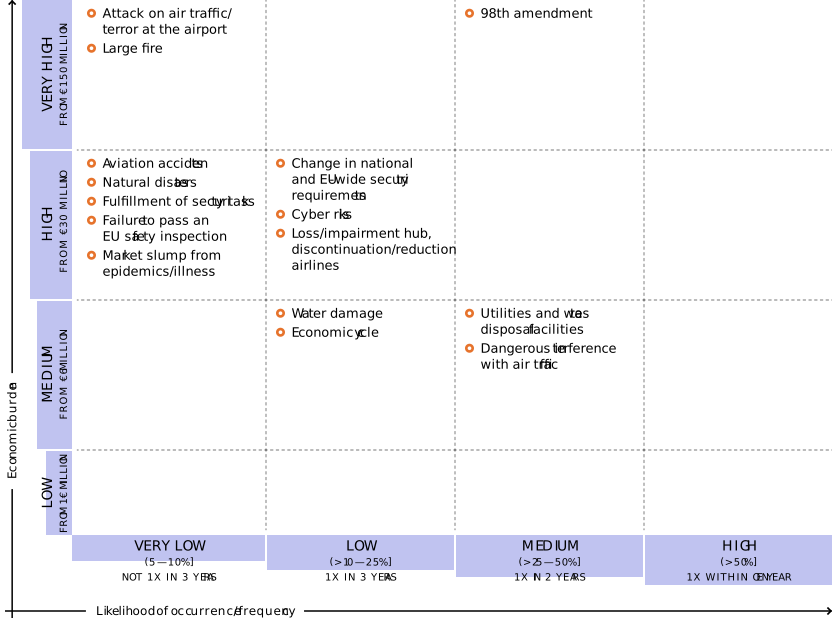
The risk «Dangerous interference in air traffic» was included as of December 31, 2025. This risk bundles specific disruptions such as drone attacks or blockades by activist groups, which have gained in relevant over the past few years. The risk «Drones» reported in the previous year is omitted as a result of this reassessment.
The risk specified in the previous year concerning the personnel situation fell below the risk tolerance threshold in 2025 and is therefore no longer reported.
The current developments in the Middle East conflict after December 31, 2025 and the energy crisis they triggered may have negative impacts on cost trends and the supply of kerosene in Europe that cannot yet be foreseen at the moment. At present, the further development of the Middle East conflict and its impacts on the aviation industry are subject to a high degree of uncertainty and may have an effect on the risk assessment in the Group. The risk is currently rated as having a medium probability of occurrence and a medium economic impact.
Risk | Description and analysis | Countermeasure(s) |
|---|---|---|
Natural disasters | Persistent and intensive rainfall together with melting snow and ground saturation to the south of Munich as far as the Alps could cause flood run-off in the Isar. A resulting breach of the Isar dams and the flood protection dikes near Freising could lead to flooding in the airport vicinity. Heavy rain can also lead to flooding. | Studies have shown that the existing flood protection dikes in the airport’s sphere of influence are adequate for intense precipitation and flash floods, which can occur during appropriate weather conditions. Countermeasures are constantly analyzed or developed so that the requirements for a «Hochwasser-TÜV» (flood protection assessment by the TÜV technical inspection agency) can be met at all times. On a permanent basis, Munich Airport monitors the wastewater discharge and carries out maintenance and repair measures. Countermeasures are being intensified at an operational level by means of crisis and risk management procedures at Munich Airport. Insurance to cover earthquakes, storms, hail, and flooding has been arranged. |
Attack on air traffic/terror at the airport | Air traffic is subject to threats from terrorist attacks. Aircraft and infrastructure facilities are relevant targets. In addition to physical injury and property damage, this could be expected to result, at least temporarily, in a decrease in the number of aircraft movements and passenger figures. | Group Security takes strategic, operative, as well as technical and organizational measures to avert possible disruptions: provision of sufficient and well-trained personnel resources, construction measures to guarantee modern and approved security technology and infrastructure, monitoring of service quality through sustainable quality measures, and a constant dialog with the responsible security authorities. Bodily injury and property damage as well as interruptions of operations are insured. |
Fulfillment of security tasks | The airline companies are responsible for security tasks in transferred areas. In these areas, airline companies fulfill the same task as airport operators, but are not subject to the same supervisory authority. For Munich Airport, there is a risk that inspections will reveal defects in transferred areas and the airport as a whole will lose its security status as a result. Defective controls could lead to property damage and bodily injury as well as reputational damage. | At present, a subsidiary of FMG is responsible for operational security tasks in the transferred areas; its services rendered are subject to regular monitoring by FMG. Furthermore, a mutual, intensive exchange takes place with the responsible government and supervisory authorities. |
Market slump from epidemics/illness | Munich Airport is an arrival, departure, and transfer point for millions of airline passengers and thus a potential gateway for bacteria and viruses from all over the world. Epidemic/sickness outbreaks can result in market downturns with reduced aircraft movements and passenger figures. | Munich Airport is subject to the law governing the implementation of international health regulations. Similarly, the rules stipulated by European Union Aviation Safety Agency, which are regularly reviewed by the supervisory authority, are complied with. Examples of protective measures against infection include: touch-free access points and faucets, regular hygiene inspection tests, safety distances and «eGates» for touch-free identification using facial recognition technology. |
Large fire | In the event of damage to or destruction of terminals or infrastructure systems caused by a large fire, property damage and bodily injury as well as long-term interruptions of operations are to be expected. | To minimize the risk of a large fire, Munich Airport takes all necessary preventive and defensive fire protection measures. To this end, it operates its own Airport Rescue and Firefighting service. FMG has taken out all-risk insurance covering property damage and business interruptions. Possible liability claims of third parties are covered by public liability insurance policy. After taking the countermeasures into consideration, the net risk is below the risk tolerance limit. |
Aviation accidents | Aviation accidents, a bird strike, or damage to aircraft can result in physical injury and property damage as well as interruptions to operations and secondary damage. | To minimize the risk, Munich Airport maintains comprehensive wildlife hazard risk management, an Airport Rescue and Firefighting service, and a medical service. An all-risk property and interruption of operations insurance policy has been taken out to cover possible damage to the air traffic infrastructure and loss of revenue as a result of business operations. After taking the countermeasures into consideration, the net risk is below the risk tolerance limit. |
Risk | Description and analysis | Countermeasure(s) |
|---|---|---|
Loss/impairment hub, discontinuation/reduction airlines | The impacts of the Covid-19 pandemic have subsided. This is reflected in the rise in passenger demand and an increased range of offers from the airlines. Air traffic in Germany is recovering more slowly compared with the rest of the world, however, on account of the high location costs (essentially fees and charges). On the other hand, the continued Ukraine conflict has so far had only little effect on traffic developments at the Munich location. | Munich Airport’s collaboration with Deutsche Lufthansa is based on joint investments and long-term cooperation agreements. Munich Airport offers excellent connection quality and in 2025 was ranked in eighth place in Europe for hub connectivity in the ACI’s «Airport Industry Connectivity Report 2025». |
Economic cycle | The global economy continues to be weighed down by a variety of crises. Uncertainty among economic actors remains high and global demand for industrial products is weakening. The global economy is expanding only at a moderate rate. While global growth is expected to lag behind the previous year’s level, the prospects for Germany and the eurozone have improved slightly. In addition, trade agreements that have been concluded, particular between the EU and the US, increase companies’ planning security. Ongoing developments nevertheless have to be monitored. | The consequences of economic slowdowns have been mitigated by reducing expenditures through cost-cutting and staff measures and by postponing investments. To ensure solvency, revolving credit lines exist or loans can be taken out on the capital market. |
Risk | Description and analysis | Countermeasure(s) |
|---|---|---|
Cyber risks | Constant new technological developments and the increasing threat of cyber attacks worldwide lead to risks in relation to the security of IT systems and networks as well as data. In the area of cybercrime, there is an increasing, abstract potential risk that requires constant monitoring and assessment. Failure of IT for traffic operations can lead to interruptions in operations. This would result in financial losses and reputational damage. | Measures to ensure a cyber security level that is standard in the industry are constantly being developed and refined. Strategic, technical, and organizational measures are implemented through an information security management system and the continuous cyber security program in order to avert cyber crime attacks Managers and employee additionally receive regular training. To reduce losses, FMG has taken out insurance against cyber risks. |
Water damage | Water damage caused by a break in or damage to the main drinking water or fire extinguishing water pipelines could lead to the failure of infrastructure systems that are important for flight operations. Damage may also be caused to existing buildings. | Remotely controlled emergency shut-off equipment and additional protective devices in the pipeline connections limit the possible damage. Property damage and interruptions of operations are insured. After taking the countermeasures into consideration, the net risk is below the risk tolerance limit. |
Change in national and EU-wide security requirements | Munich Airport is subject to national and EU-wide aviation security requirements, encompassing the topics of airport security, air passenger and hand luggage checks, airfreight, airmail and goods control, among others. Security requirements are adjusted continuously to the current circumstances. This can give rise to procedural and also infrastructural changes for the Munich Airport. Corresponding financial burdens would then follow. | Munich Airport attempts to minimize these consequences through work in associations and on committees. Early information relating to ongoing legislative procedures ensures the prompt implementation of security regulations. Additional expenses incurred as a result of infrastructural changes are considered in the framework agreement on charges. |
Failure to pass an EU safety inspection | The EU’s aviation authorities are conducting safety inspections at airports. If it does not comply with the safety standards and subsequently fails the follow-up audit, Munich Airport may lose its «Clean» status. The consequences would be a heightening of the safety regulations, considerable obstruction with operational processes, competitive disadvantages, and a loss of image. The last inspection in May 2022 was completed successfully. | Munich Airport conducts thorough and strict quality controls to manage the quality of all safety aspects at the airport. The quality controls have shown that the countermeasures that are taken and the consistent monitoring are effective and that – in theory and practice – very well-trained personnel are employed. |
Utilities and waste disposal facilities | Insufficient availability of utilities required for operations, such as electricity, heating, cooling, drinking and fire-fighting water, wastewater and waste, can lead to business interruptions and reputational damage.Insufficient availability of utilities required for operations, such as electricity, heating, cooling, drinking and fire-fighting water, wastewater and waste, can lead to business interruptions and reputational damage. | Annual and extensive tests of all emergency and back-up operating systems, service and maintenance programs, network redundancies and storage, as well as suitable personnel, reduce the risk of gaps in supply. After taking the countermeasures into consideration, the net risk is below the risk tolerance limit. |
Dangerous interference in air traffic | As a central hub, Munich Airport has a high level of public and media visibility and is thus a potential target for disruptive actions. The risk comprises adverse impacts on air traffic operations through (politically motivated) interference, such as drone attacked, blockade campaigns, or unauthorized intrusion into the security area. These events could lead to delays, temporary shutdowns of operations, loss of revenue, and reputational damage. Disruptions to time-critical processes, such as rescue service, can have especially serious impacts, for example during emergency landings necessitated by medical incidents. The detection of and defense against drones is classified as a sovereign task and is therefore not the responsibility of the airport operator. | Munich Airport’s Group Security relies on sufficiently qualified personnel, modern security technology, and a close and continual dialog with the relevant security authorities. For drone-related disruptions, FMG has an established emergency plan that clearly regulates the procedures to be implemented when drones are sighted. The situation is assessed and the steps to be initiated are taken here in close coordination with the key authorities – the state police, the federal police, and German air traffic control. |
Risk | Description and analysis | Countermeasure(s) |
|---|---|---|
98th amendment | Due to the political moratorium and the resulting postponement of the decision to realize the third runway, all planning and land acquisition costs incurred to date must be tested for impairment on an ongoing basis and written off if necessary. Without an increase in capacity brought about by the construction of the third runway, there could be capacity bottlenecks and a significant loss of company value in the medium and long term. This will be influenced primarily by stagnating or declining traffic volumes and the associated lower revenues. The moratorium was extended until 2028 with the latest coalition agreement for the current legislative period in Bavaria. | The confirmation of the planning approval decision by the Bavarian Administrative Court on February 19, 2014 and in the following year by the German Federal Administrative Court limited the legal risks for the implementation of the project. By notice of September 30, 2024, the Southern Bavaria Aviation Office confirmed that FMG had begun to implement the «Planning approval decision for the expansion of the Munich passenger airport through the construction and operation of a third runway plus ancillary facilities, sub-projects, and follow-up measures» of July 5, 2011 (98th ÄPFB – Amended planning approval decision) within the meaning of section 9(3) of the Luftverkehrsgesetz (LuftVG – Air Traffic Act). The notice was confirmed in the proceedings at first instance by the ruling of the Bavarian Administrative Court of July 30, 2025; the ruling is not yet final and binding. This means that the 98th ÄPFB pursuant to section 9(3) LuftVG will no longer cease to be valid upon the expiry of ten years after it becomes non-appealable. The appropriate expansion of the airside infrastructure remains a key strategic project for Munich Airport in the medium and long-term. |
Munich Airport is confronted with various legal disputes during the normal course of business. These can lead, in particular, to the payment of compensation claims or, in the case of construction projects, to changes in the remuneration of services. Moreover, other legal disputes can be initiated or existing legal disputes can be expanded. Apart from matters for which provisions have already been made in the balance sheet, Munich Airport is not currently anticipating any material negative impacts for the results of operations, assets and financial position from other known cases at the present time.
In the case of foreign subsidiaries, risks may arise in particular from the assumption of operational responsibility abroad in the context of consulting services for other airports and the operation of terminals. Airport operator projects run for long periods of time and are subject to the general economic and company-specific risks – ranging from future air traffic developments to changing consumer behavior on the part of airline passengers. To minimize risk, Munich Airport therefore works with local partners who have experience in the specific country regulations and conditions. To counter liability risks for Munich Airport in particular, local limited liability companies have been established outside Germany to act as independent entities and as local contractors. Risks may also arise from unforeseen regulatory intervention in the tariff, tax and levy structure of airports or from contractual breaches to the detriment of airport operators.
(Operational) audits by tax authorities are also considered a general risk.
Financial risks
The expected financial burden for the gross financial risks listed below were under the reporting limit as at December 31, 2025. Therefore they were not included in the risk reporting. The monitoring and management of these risks are the responsibility of central finance and liquidity management unit.
Risk | Description and analysis | Countermeasure(s) |
|---|---|---|
Currency risks | Currency risks arise insofar as planned revenue in foreign currencies is not offset by any corresponding expenses in the same currency. | Munich Airport hedges net currency exposures using forward exchange transactions. |
Credit and default risks | Credit and default risks primarily arise from short-term deposits as well as trade receivables. | Deposits are (generally) only made with (German) credit institutions with deposit protection. The management of risks of default includes credit checks for customers, continuous monitoring of outstanding items, and a stringent dunning system. Dependent on the credit rating, certain services are only performed against prepayment or provision of collateral in the form of guarantees. |
Interest rate risks | Interest rate risks result largely from floating-rate financial liabilities arising from loans if interest rates rise. | Munich Airport counters interest rate risks from floating-rate financial liabilities from loans by hedging with interest rate payer swaps. Strategies for limiting the medium-term interest risks are examined against the background of a changing environment. |
Liquidity risk | Liquidity risks may arise from banks’ lending practices and changes in the general conditions on the capital market with regard to the assets, financial position and results of operations. Munich Airport monitors the risk as part of its long-term business planning and short- and medium-term financial planning. | To secure liquidity, Munich Airport has established a liquidity management system. Liquidity planning takes into account the ongoing business, the investments and the financing aspects for the entire Group. It also focuses on ensuring access to credit and capital markets. In order to ensure solvency at all times, long-term credit lines and liquid funds are made available based on a rolling liquidity plan. |
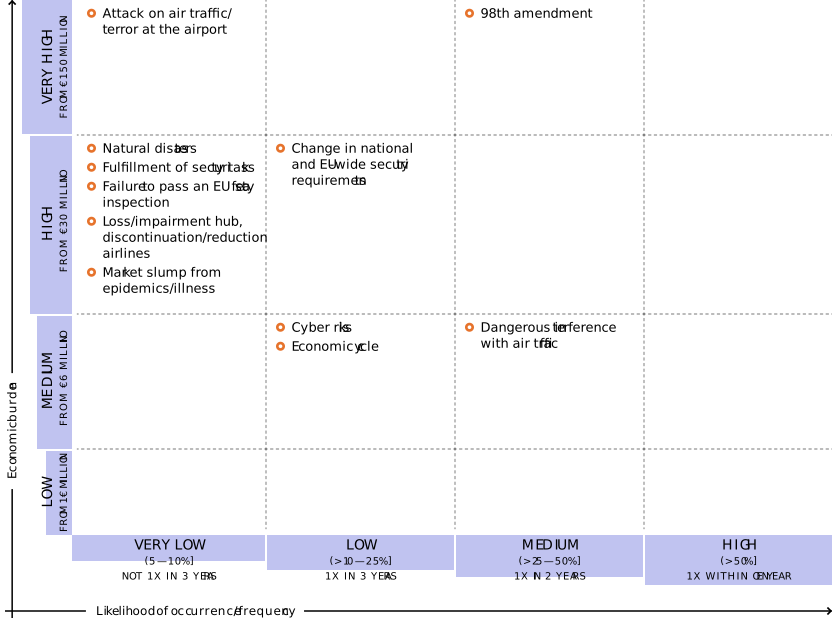
After considering countermeasures, the following net risks remain:
Overall assessment of the opportunities and risk situation
It is important for Munich Airport to actively seize opportunities as they arise in order to secure and further improve its position in the market through steady growth. However, it is also a key objective of Munich Airport to recognize risks in good time and to counter them systematically.
Therefore, the actual expected impact of possible events and developments is already taken into account in the business planning every year. The reported opportunities and risks are defined as potential deviations going beyond the forecast corporate result. Munich Airport consolidates and aggregates the risks reported by the corporate divisions and Group companies and reports them to the Executive Board and shareholders on a quarterly basis. Opportunities are identified and managed in collaboration with the Finance and Controlling corporate division.
No risks that individually or in their entirety could jeopardize the continued existence of Munich Airport were foreseeable from the Group-wide risk management system or in the assessment of the Executive Board during the current forecast period. The Executive Board is convinced that it will be possible to access liquidity in order to cover financing requirements, as was the case in the previous year. With its diversified business units, Munich Airport’s fundamental earnings power forms a solid basis for exploiting opportunities for future business development and for providing the necessary resources to accomplish this.
Munich Airport would like to point out that various known and unknown risks, uncertainties and other factors could lead to material differences between the actual events, the financial situation, the development or performance of the company and the estimates given here.
Munich, April 21, 2026
Jost Lammers
Dr. Jan-Henrik Andersson
Thomas Hoff Andersson
ifo Institute, Economic Forecast Winter 2025, December 2025, pp. 5, 6, 8; Kiel Institute for the World Economy, Kiel Economic Outlook no. 128 (2025 | Q4), December 2025, pp. 10, 12
ifo Institute, Economic Forecast Winter 2025, December 2025, pp. 6, 8; German Council of Economic Experts, Annual Report 2025/26, November 2025, p. 33
ifo Institute, Economic Forecast Winter 2025, December 2025, pp. 6, 8; German Council of Economic Experts, Annual Report 2025/26, November 2025, p. 35
ifo Institute, Economic Forecast Winter 2025, December 2025, pp. 12, 16, 20
ifo Institute, Economic Forecast Winter 2025, December 2025, p. 8
ifo Institute, Economic Forecast Spring 2026, March 12, 2026
Bavarian State Statistical Office, Regionalized Population Projection for Bavaria to 2043, May 2025 p. 20 ff.
ACI World, Global air travel forecast to reach 9.8 billion passengers in 2025, nearing the historic 10 billion milestone, September 2025; https://aviationweek.com/air-transport/airports-networks/aci-world-projects-2025-global-passenger-traffic-hit-98b
www.airliners.de: ACI Europe fordert EU-Notfallplan gegen drohenden Kerosinmangel (ACI Europe calls for EU emergency plan to counter impending kerosene shortages)