Procurement: as diverse as the requirements
We procure a wide range of products and services required for the operation of the airport and expansion of an international hub airport. Our range of goods is comparable to that of a small town: the more than 130 product groups range from office supplies and road construction to vehicles and buildings. In 2025, the procurement volume of the Flughafen München GmbH Group amounted to approximately 968 million euros (net), representing an increase of 21 percent compared to the previous year. To realize synergy effects, the central procurement function manages almost all procurement processes of the specialist departments as well as those of the subsidiaries.
Procurement processes: procurement board firmly established
Our Procurement Board, introduced in 2024, has proven effective. It helps to further optimize procurement processes across the Group, make strategic procurement decisions at an early stage, and promote even closer collaboration between the various corporate divisions and procurement. It is also intended to improve decision-making in the procurement process, particularly in complex projects and strategic procurement matters.
Public procurement law: transparent guidelines
Munich Airport operates as a sector contracting entity in the field of «ports and airports.» As such, it ensures its procurement policy is consistent with public procurement legislation. Where public contracts are involved, calls for tenders are issued on a Europe-wide basis in keeping with the binding regulations under procurement law. Contracts that do not fall under public procurement law are generally tendered in accordance with a company-specific, formalized procedure. Bidders must confirm compliance with statutory requirements when submitting their bids in order to exclude any grounds that would prevent participation in public procurement or tendering procedures. In addition, as part of the suitability assessment, they must demonstrate that they meet the company-specific, technical, and economic criteria. Furthermore, there are a number of internal requirements for our employees. The general principles of purchasing are enshrined in the company as the «Ten Golden Rules of Procurement» and serve as a code of conduct for legally compliant procurement between the specialist department and purchasing.
Contracts: high sustainability standards
We award contracts based on economic efficiency and place particular emphasis on sustainability aspects. Awareness of sustainable procurement begins in our specialist departments. They define economic, ecological, and social standards that apply when procuring goods and services. This applies equally in IT and maintenance, as well as in the construction of buildings, the vehicle pool, and the purchase of promotional materials. For example, when procuring capital goods, we take into account follow-up costs for maintenance and servicing (life cycle costs).
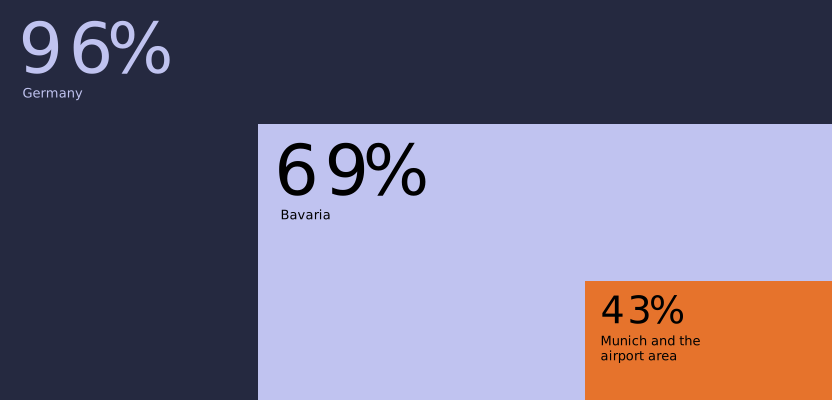
Share of the airport’s procurement volume
Supply relationships: a focus on the region
3,992 suppliers were active for Munich Airport in 2025. Since Munich Airport is primarily supplied by regional business partners, transport distances are short and CO₂ emissions are low. Our subsidiary Allresto, for example, sources predominantly seasonal food products: almost all originate from Bavaria – with well over half coming from the airport region.
With our strategically important framework agreement partners, we conduct annual supplier meetings based on our evaluations of the criteria of price and competitiveness, quality, service, reliability, as well as innovation and sustainability. In a regular dialogue, we work together with our business partners to identify optimization potential in order to continuously improve deliveries and services along the supply chain and strengthen our partnership-based collaboration. In addition, we use the Integrity Next platform to review the sustainability criteria of our suppliers in order to ensure compliance with ESG standards (environment, social, and compliance) as well as the requirements of the Supply Chain Due Diligence Act (LkSG).